Whenever you embark on a journey, the unfamiliar surroundings and challenges can serve as profound teachers. The lessons learned in such moments are often etched into your memory, as they come amidst the backdrop of perseverance and a tested spirit. In a foreign land where roads and pathways are unfamiliar, and your mind and body may feel defeated, it is your soul that propels you forward. Nature, in these moments, imparts lessons that penetrate not just your body and mind but directly enter into your soul, leaving lasting imprints.
During my trip to Abha last year, I encountered a valuable lesson that shed light on a hadith I had heard many times before but now understood on a deeper level.
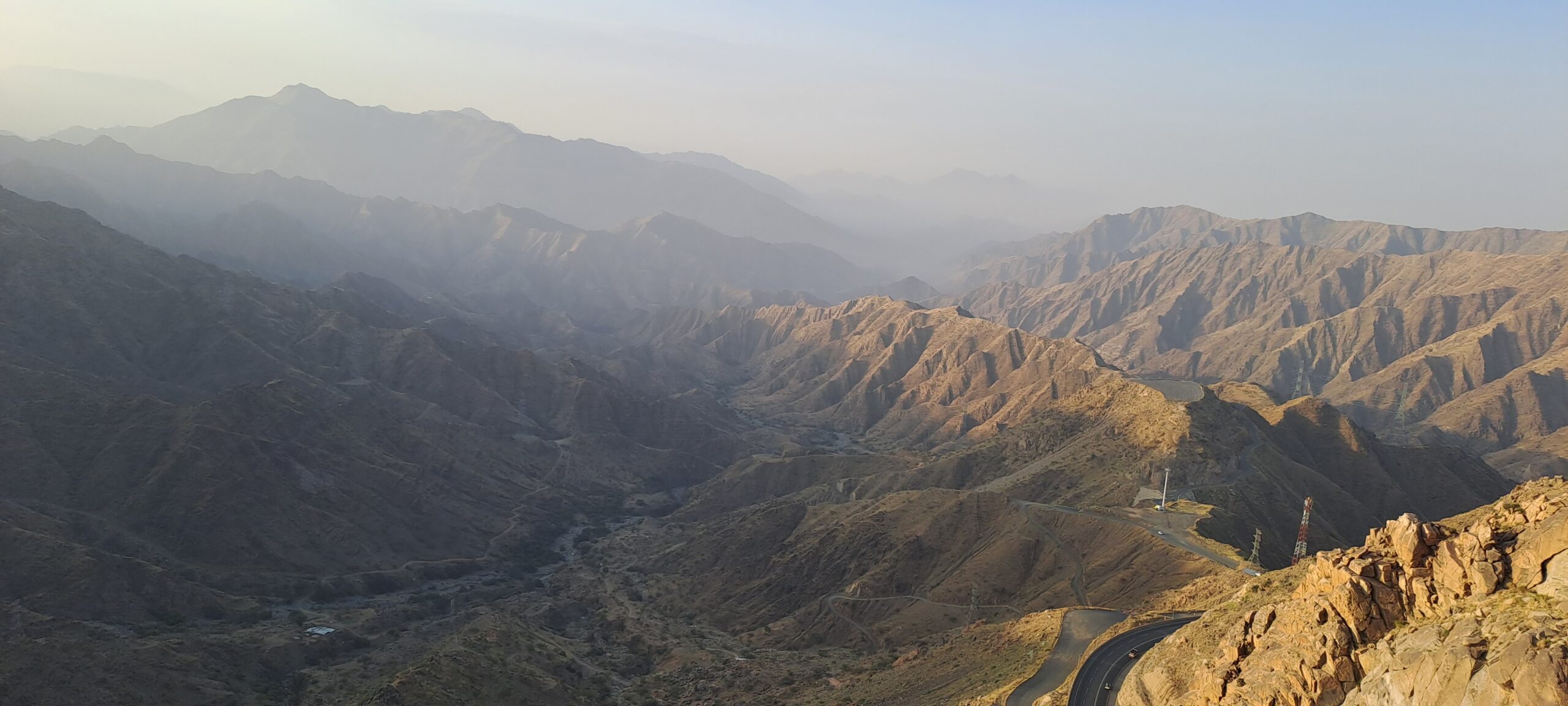
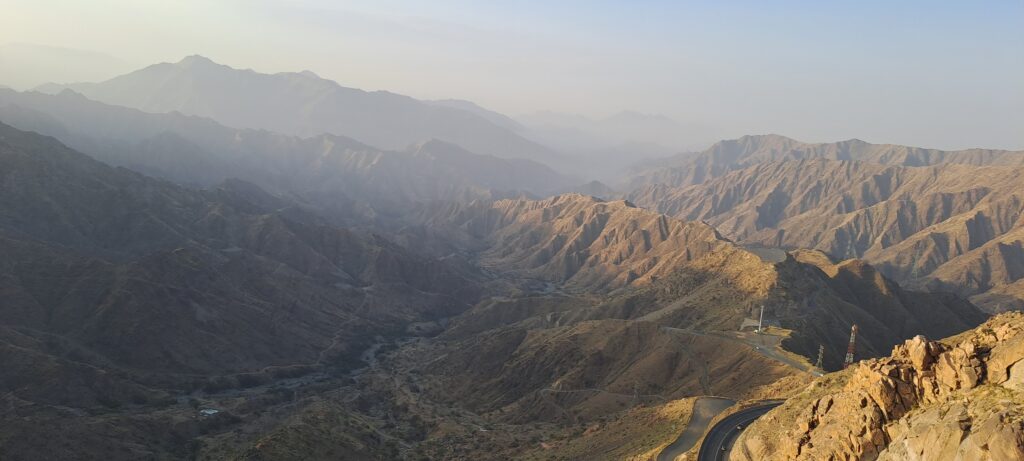
On a crisp morning, my wife and I ventured onto the Al Dahab walkway. The view was stunning. The mountains that surrounded us were a spectacle, with layers resembling the folds of a fully opened curtain, gracefully curved. Stretching as far as the eye could see, these majestic mountains framed the landscape. Between them, roads snaked through the terrain, accentuating the awe-inspiring beauty of the scene. However, what truly captivated me was the deep valleys nestled between the mountains. These valleys were so profound that the cars traversing the roads below appeared minuscule, resembling tiny mice scurrying through the vastness.
It was at that time that the hadith on greed raced into my mind.
“If the children of Adam possess a valley of gold, (still), he would wish that he has two valleys. And his mouth would never be filled except with sand. And whosoever makes Taubah to Allah azza wa jall, his Taubah would be accepted.”
(Bukhari; Muslim Shareef)
Standing on the sidelines, I imagined the valley in front of me, filled with gold, but not being enough. I thought about my yearning for just a ‘little’ bit more so that I may fulfill some more of my desires. I thought about millionaires aspiring to be billionaires and billionaires wanting more. Nothing, it seems, is ever enough for us. This thought made me realize that this perpetual desire for accumulation could be a profound spiritual ailment. At that moment, I made a heartfelt dua to Allah, pleading,
‘Ya Allah, protect me from such an illness, for I do not know how to protect myself’.
Standing there I started counting what I had and thanking Allah for each blessing. I started comparing my luxurious life with people with far less and still being happy and thankful for what they had. I started to think about how all of these blessings are not because of my effort but only because of the profound blessings of Allah.
Lessons from nature have a unique way of penetrating the soul, leaving us with insights that linger long after the journey has ended. This encounter, at least for me, served as a reminder to appreciate the blessings we have and to guard against the insatiable desire for more.
I have seen several breathtaking wonders of nature and every time the first expression that came to my mind was ‘Subhan Allah’ (glory be to Allah), for only HE can create such wonders. But the first expression that came to my mouth, on seeing the Wahbah crater, was ‘Auzu Billah’ (I seek the protection of Allah).
Reaching The Wahbah Crater
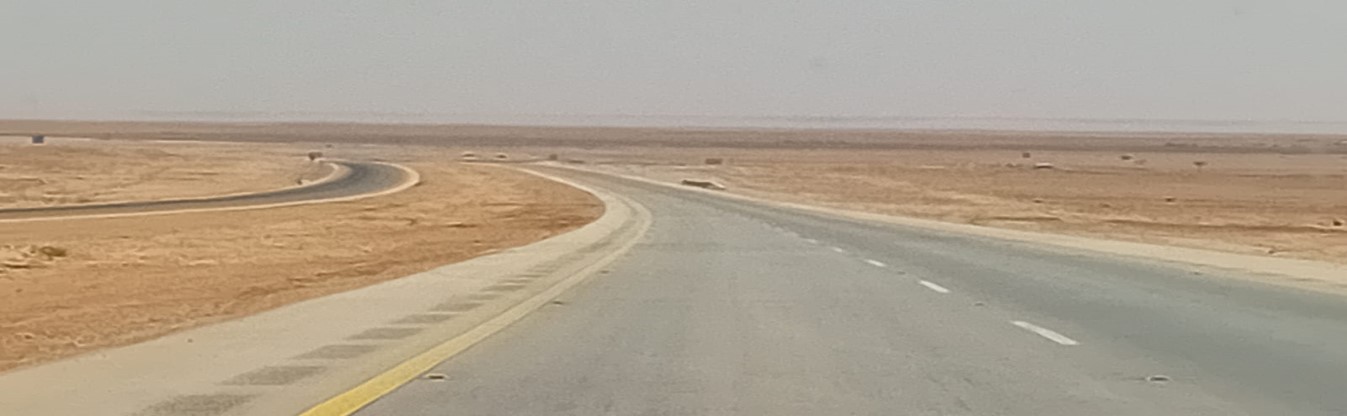
First, let me provide some context so you have an idea of what I was feeling when I reached the Wahbah crater. From Kuwait, I drove to a city in Saudi Arabia called Dhulm which took around 1,000 km and 11 hours of continuous driving. We reached Dhulm around sunset and did nothing except eat and sleep. The sleep was as comfortable as it can be in a new place with my brain flooded with various concerns regarding the trip. We left Dhulm immediately after Fajr prayers since our plan was to reach the Wahbah crater before the sun started to produce unbearable heat. The drive of around 200 km was on an impressive road infrastructure and we did not face a single stretch of off-road driving, even though the last leg of the drive was between various mountains and hills.
After Dhulm our next destination was Al-Baha where we planned to make an overnight stop and then move towards the hill station of Abha. The long journey ahead made me question whether this 200 KM detour to the Wahbah crater was even worth the time and effort. An inner voice was telling me ‘What is there to see, some mountains and a hole?’
With these apprehensions, I parked my car in the provided parking area. There were some facilities such as washrooms, Masjid, and a visitor center but all were closed. I don’t know if the closure was because it was off-season or because we were early. Anyway, it didn’t matter. We were not there for the facilities, but rather for the crater, which was open 24/7.
From the parking, I was not able to see the crater, but I started feeling a bit anxious. Maybe it was my paternal instinct to sound alarms about the safety of the place. From the parking lot, I remember climbing to the nearest viewing gallery and seeing the crater for the first time.
Immediately, I was taken aback by a haunting feeling, and the words ‘Auzu Billah’, came automatically to my mouth.
Before I begin describing my observations, it’s essential to emphasize that for me safety always takes precedence, especially when it involves my family and children. Prior to our visit to this location, I conducted thorough research, watching videos and viewing images of people not only admiring the crater from a secure distance but also descending to its base. I saw entire families, including toddlers, exploring the depths of the crater and even tasting the salt on its floor. So, in my mind, this adventure seemed perfectly safe.
However, upon reaching the designated viewing point and gazing into the crater, a sense of unease washed over me. Perhaps it was due to the crater’s sheer size and depth, which hadn’t been adequately conveyed in the pictures and videos that I had seen earlier. It might have been the presence of a mysterious white mist rising from the crater’s base and extending to several hundred meters into the surrounding mountains or the fact that we were entirely alone at the site. Or maybe it was a combination of all these factors that left me with a feeling of uncertainty.
How the Wahbah Crater Looked
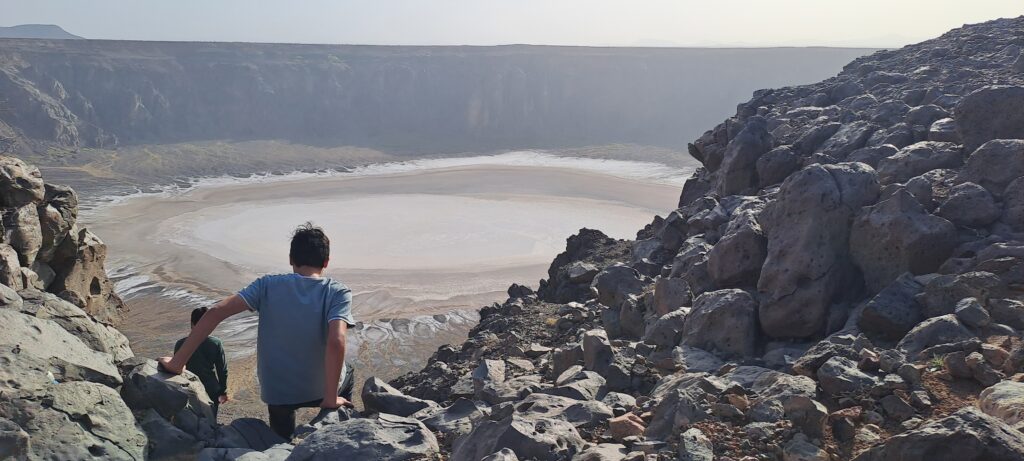
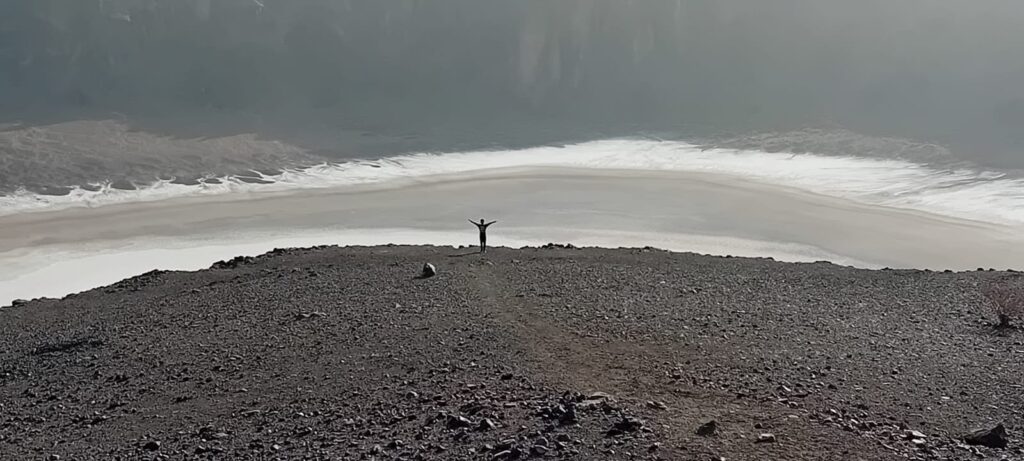
The diameter of the crater was about the size of 8 full-sized soccer fields and the depth was almost about 100 stories of a standard apartment building
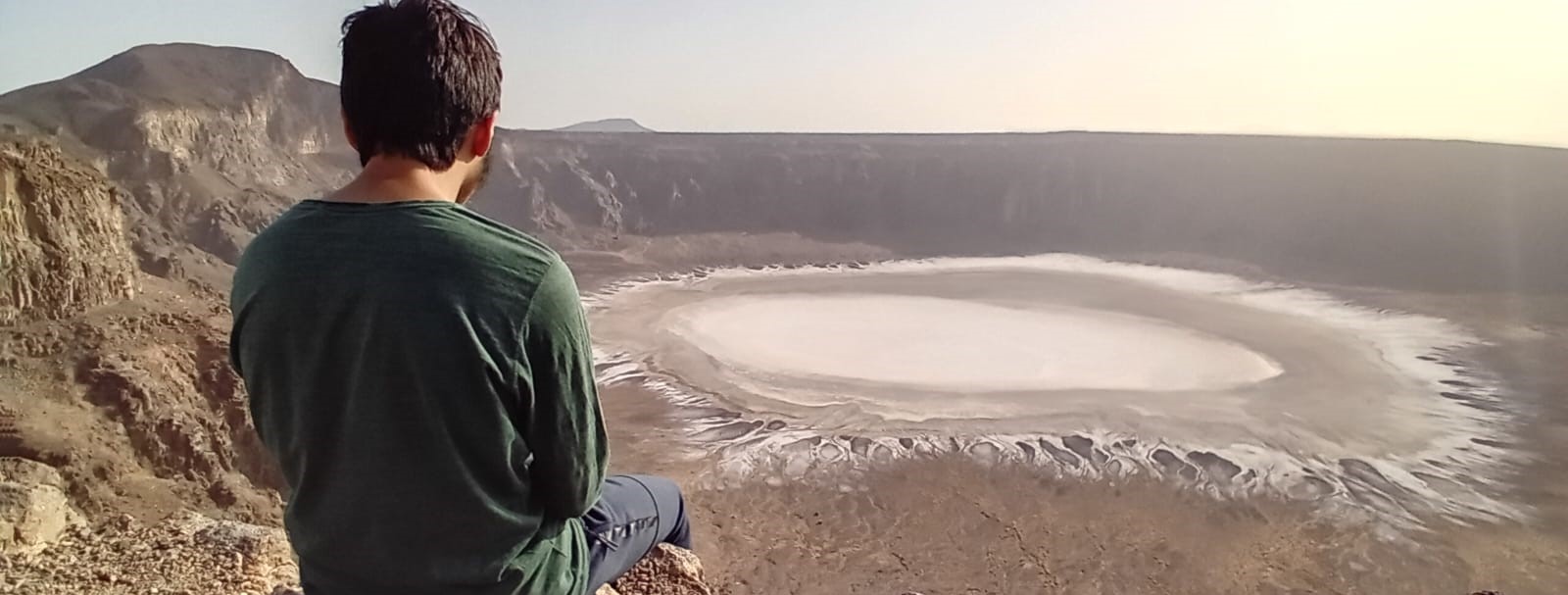
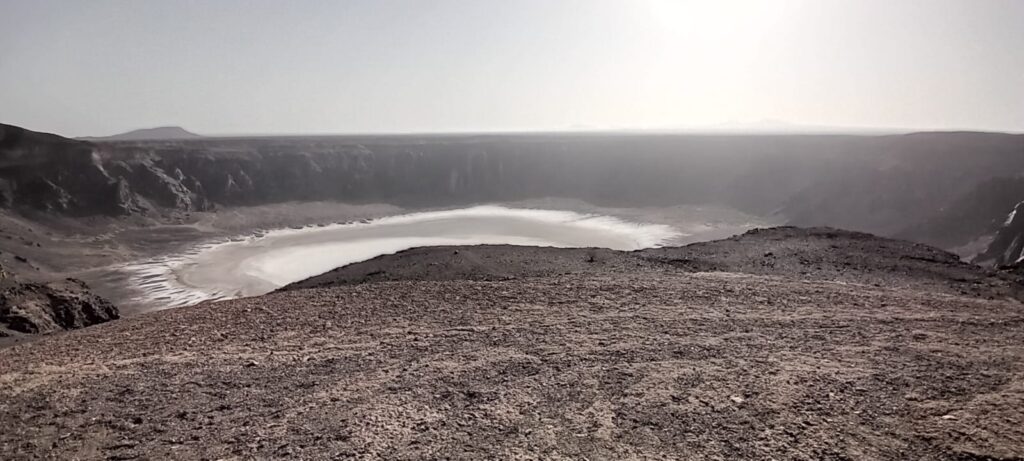
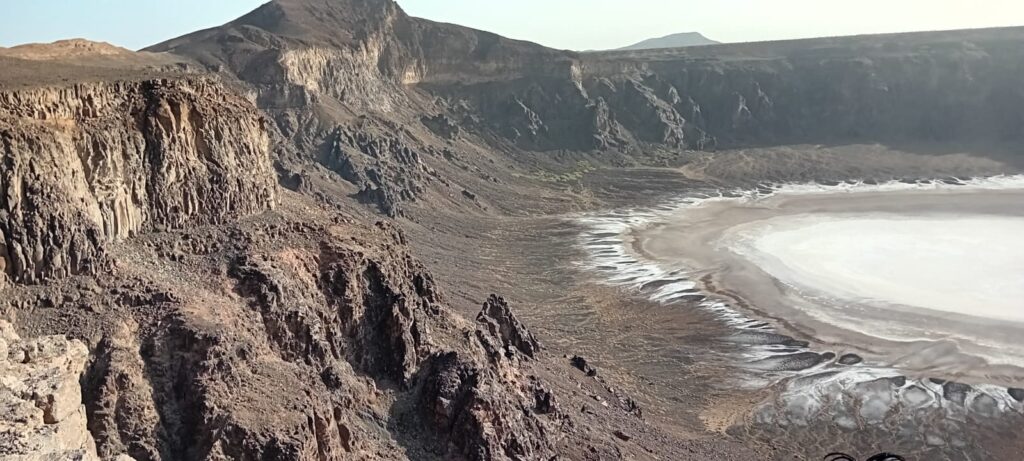
The crater has a diameter of 2 kilometers, which is around the size of 8 full-sized soccer fields, and a steep fall of around 300 meters (about 984.25 ft) which is almost 100 stories of a standard apartment building. The floor of the crater was white as it was covered by white sodium phosphate crystals creating a striking contrast with the surrounding dark volcanic rocks. I noticed a foggy mist rising from the base of the crater to a few hundred meters above the mountains, something that I had not seen in any of the videos or pictures. The fog was something that was adding to the overall haunting feel of the Wahbah crater.
Volcanic Fog or VOG
The weather around was pleasant but there was no sign of any fog or mist except for what was rising from within the crater to a few hundred meters above the highest point of the crater. The mist, as I later found out, was due to a phenomenon called volcanic fog or vog. Vog is formed when volcanic gases, such as sulfur dioxide and other particles, react with moisture in the air, creating a hazy and misty atmosphere. This volcanic fog can sometimes be localized and confined to specific areas, like the inside of the crater, even when there is no fog present in the surrounding regions. The pleasant weather might have played a role in facilitating the formation of vog, as temperature and humidity conditions contribute to this occurrence. In all the videos that I had seen and the material I had read online, there was no mention of Vogs. The Vog that we were witnessing could contain harmful gases and particles, so I was not sure if we should be climbing down or even being so close to it.
Climbing Down
The kids were excited and wanted to climb down. In multiple videos that I had seen on YouTube, I had seen a path specially created for people wishing to climb down into the crater. It was a maximum descent of about 30-40 minutes for small kids while adults could have climbed down a bit faster. So initially I did not see a problem, except that I could not find that path. And wherever the path could have been it seemed to be closed by some sort of human-caused landfall. Kids tried to discover some paths of their own, but it did not look safe, so we went back up to the designated viewing areas. Later I found out that Saudi authorities had closed the path as it was unsafe because of the VOG. Some locals had to be rushed to hospitals because of breathing issues. So in the end it was good that we did not risk climbing down in the crater.
Whispering Gallery Effect
Another extraordinary experience was that we could talk to each other without shouting even if we were around a kilometer away from each other. That felt creepy and fun at the same time. This phenomenon that we experienced, where sound travels exceptionally well over long distances in a specific area, is known as acoustic mirroring or the “whispering gallery effect.” This effect occurs due to specific acoustic properties of the landscape, such as the crater’s unique shape and the presence of natural reflectors that help sound waves travel long distances with minimal loss of energy. Natural reflectors in the context of the Wahbah crater can be the surrounding hills or cliffs and/or the temperature and wind patterns redirecting sound waves toward specific locations. Temperature inversions can, in some cases, create layers of air with varying densities leading to sound refraction and reflection.
In such natural formations, sound waves can be directed and focused, allowing them to travel great distances even when there are obstacles in between. This can result in clear and audible communication between individuals who are far apart without the need for shouting or using loudspeakers.
The whispering gallery effect is an interesting and remarkable acoustic phenomenon that occurs in various natural and man-made structures, and it was so fascinating to experience it firsthand!
How was the Wahbah crater formed?
The Wahbah Crater, also known as Al Wahbah, is a volcanic crater, and its formation is attributed to volcanic activity. The general process of crater formation might have involved the following steps:
A Volcanic Eruption during which molten magma, ash, and gases are expelled from the Earth’s interior onto the surface. The eruption might have been explosive, leading to the ejection of substantial amounts of volcanic material, including rocks, ash, and gas, into the atmosphere. After the eruption, the emptied magma chamber beneath the volcano could have collapsed due to the loss of support, leading to the formation of a large depression on the Earth’s surface. Over time, the depression might have undergone various erosion processes, including weathering, rainfall, and wind, which shaped the crater’s final form. The white sodium phosphate crystals on the crater floor are likely the result of evaporative processes that occurred when water from rain or other sources interacted with the volcanic material, leaving behind these mineral deposits.
It’s important to note that the exact details of the crater’s formation may vary depending on the specific volcanic activity and geological processes involved.
Conclusion
Wahbah Crater is a remarkable geological feature that offers insights into the volcanic history of the region and continues to attract curious visitors like us. After spending around 30-40 minutes on the various viewing points around the crater, I was quite thankful that I took the 200 KM detour. After all, that is what adventure is all about, you never know whether the destination you are going to will be a boom or a bust. The only thing we missed doing, was climbing down to the base of the crater and experiencing it from there. However due to the mist, it was not safe to be outside the viewing areas, let alone climbing down to the crater.
For more blogs on my traveling experiences, stay tuned to the ‘thepakistandream.com’.
Whenever I am about to start planning for a road trip, my mind becomes a whirlwind of anxieties and apprehensions. Thoughts of my family’s health and safety, my car’s reliability, the enjoyability of the destinations, the friendliness of the locals, and the security of my possessions back home swirl within me. Sometimes these concerns become so magnified that I start questioning the worthiness of the trip that I am planning to embark on. Why not stay cocooned in the comfort of my home, within the boundaries of familiarity? My mind oscillates between two extremes, like a pendulum, one urging me to stay put, while the other whispers tales of adventure, exploration, and, above all, learning. Those close to me have witnessed this inner conflict firsthand, and by now, they’ve grown accustomed to it.
With these inner struggles, I started planning my two-week trip through various cities of Saudi Arabia. As the departure date neared, I found myself oscillating between bouts of lethargy and surges of adventurous anticipation. One day, I dreaded the prospect of driving for countless hours, and the next, I brimmed with adrenaline at the thought of encountering new places.
In this emotional state, my mind served me a memory of a book that I had read years ago. Jahan-e-Deedah by Mufti Taqi Usmani. Along with the memory of the book, came several linked memories and sensations that I had formed and felt while reading the book. Probably, it was this book itself, that made a lazy person like me want to witness magical lands loaded with natural beauty, and historical sites, and see different cultures and people. No amount of reading, viewing pictures, or watching videos could replicate such profound experiences that one forms while traveling. While the book rekindled my longing for travel, I tried to remember whether the book covered any wisdom on the emotional turmoil that I experienced before every travel. With this intention, I picked the book again.
In Jahan-e-Deedah Mufti Sahab writes about his travels to around twenty countries. The book begins with the verse.
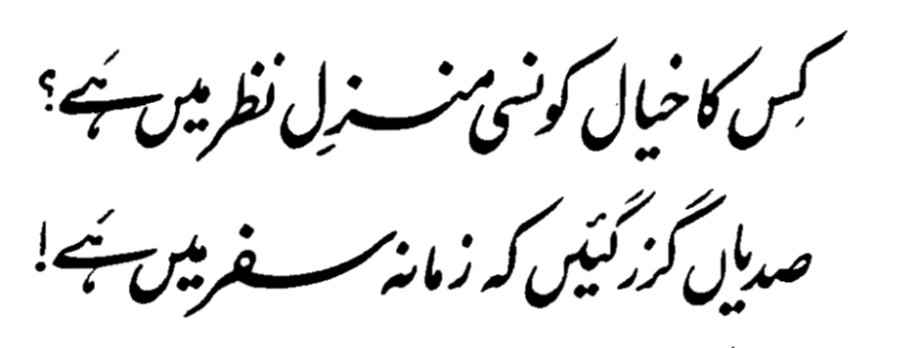
Who knows what destinations life has penned on my pages For Travel has become my quest since ages
Mufti Taqi Usmani
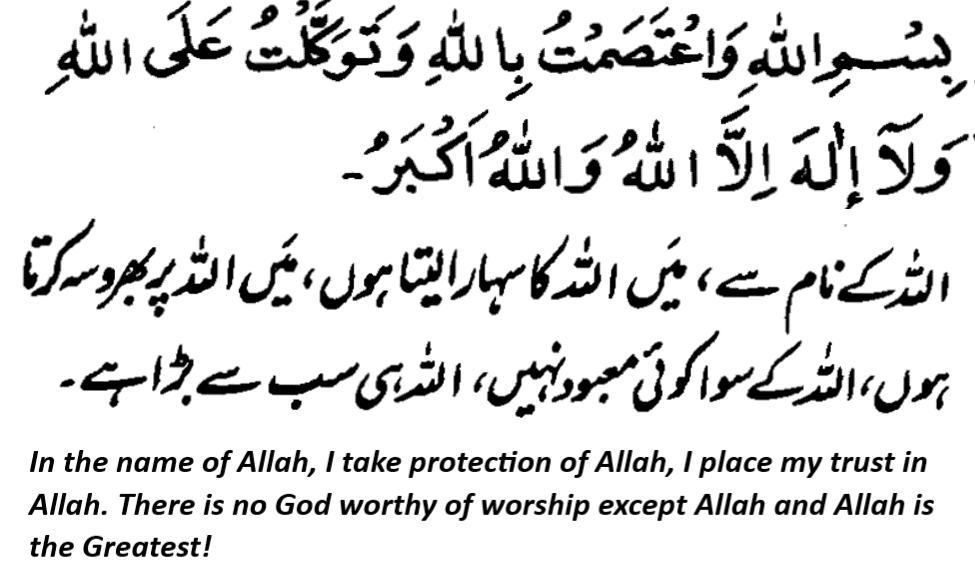
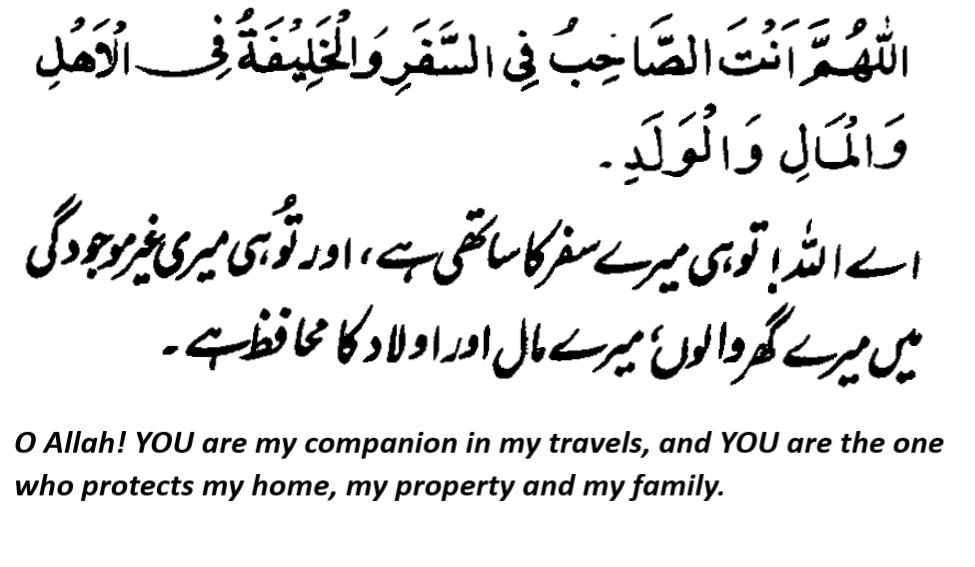
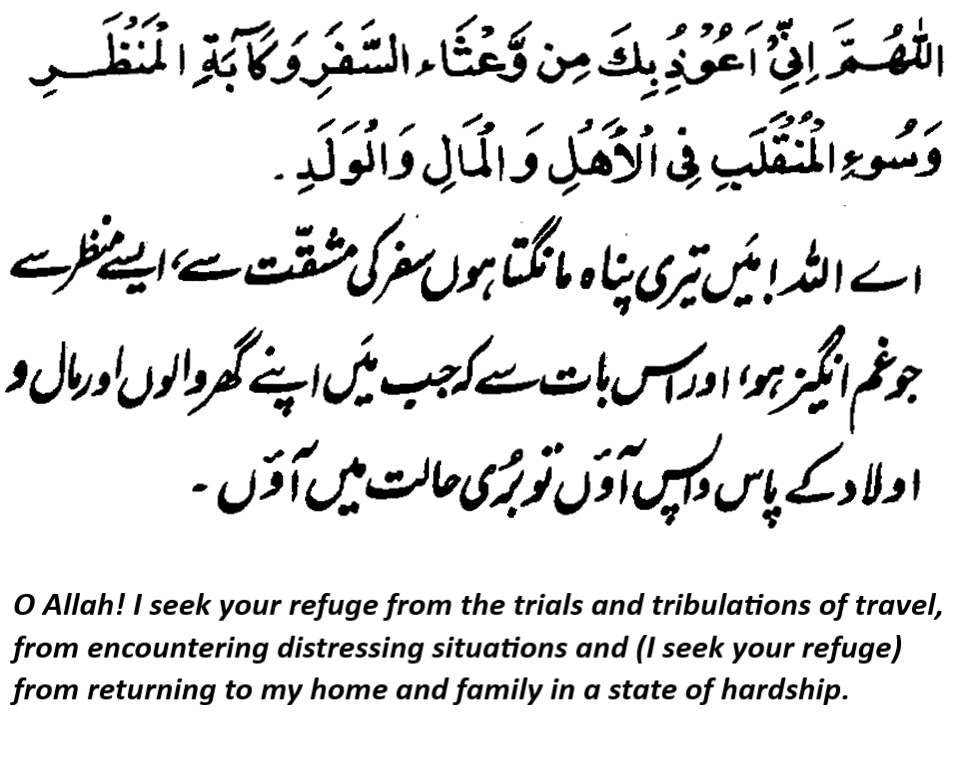
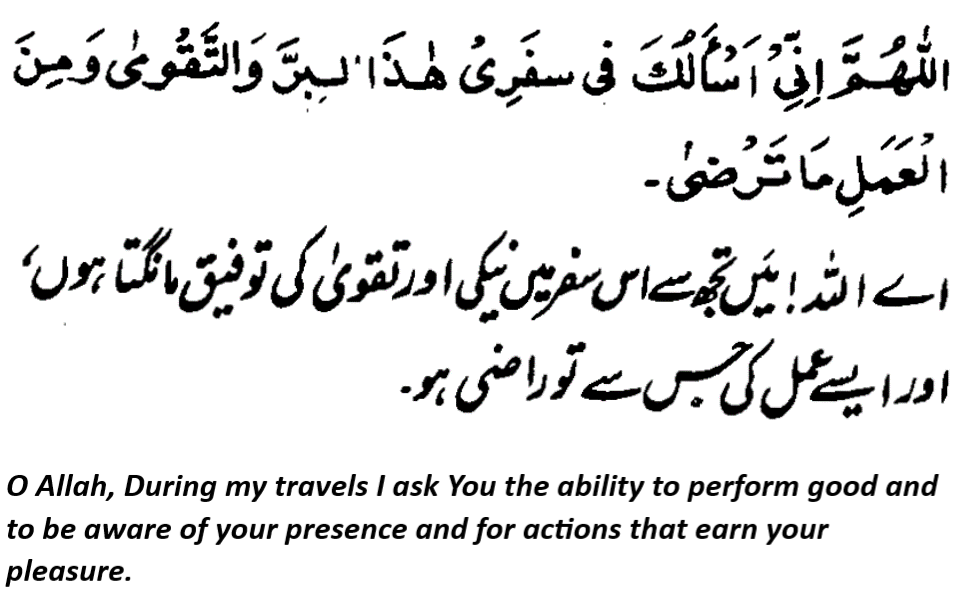
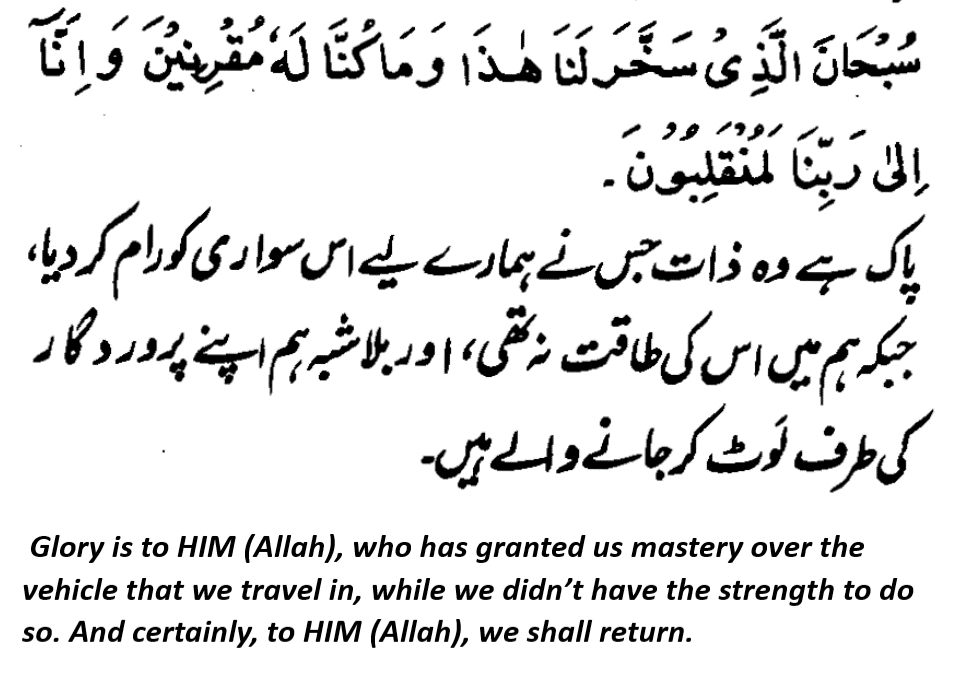
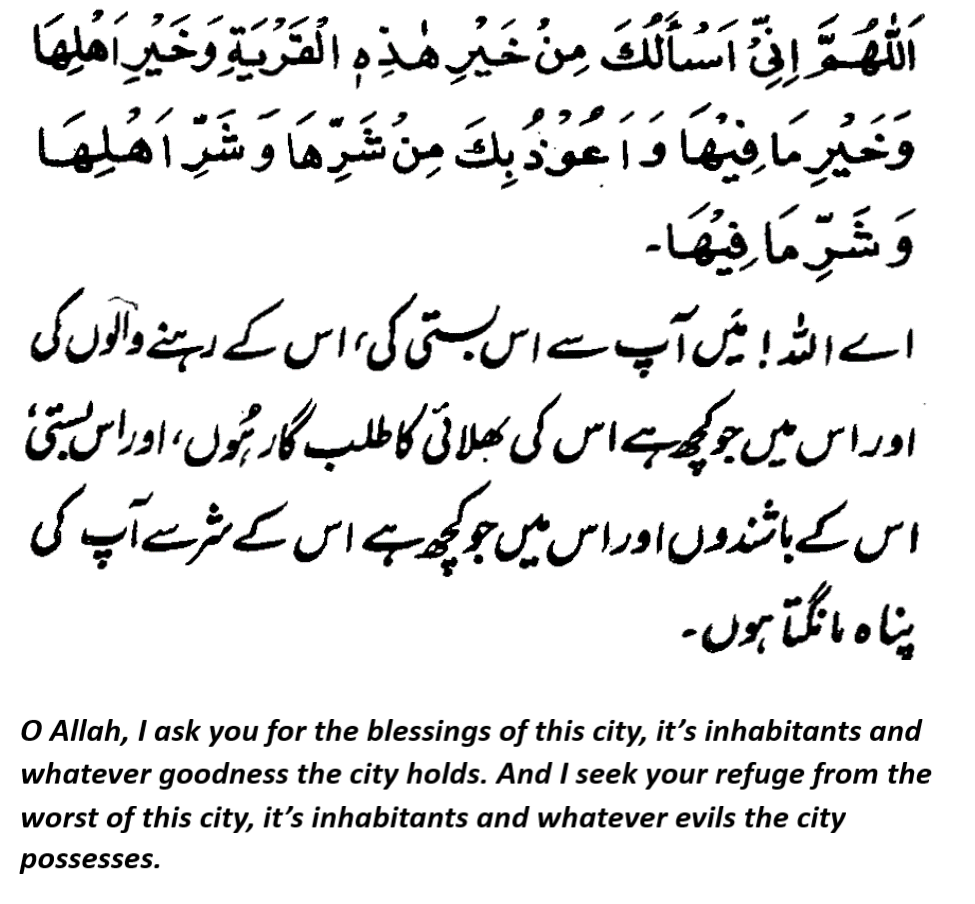
A few pages in, Mufti Sahab discusses the turmoil and anxieties that a traveler faces before every journey. I felt like I had hit the jackpot since they were exactly the same concerns that I was having. He then provides a remedy for countering these emotions which is a collection of duas that Rasool Allah (peace be upon him) used to recite before and during his journeys. When I read these duas and their meanings, I felt that they not only helped me address my anxieties but also gave me the opportunity to follow the Sunnah of Traveling.
The duas with their meanings in both Urdu and English are shared here.
After reading the duas with their meanings, I felt a considerable decline in my anxiousness, and secure in the belief that Allah would be with me, whether in a bustling city or on a deserted highway. This, I believe, was the most significant lesson I learned, and I pray that these duas remain close to me before every journey that I make.
In my next blog post, I’ll share the stunning experience of seeing the Wahbah Crater up, close and personal. Follow me on Twitter to know when the post is out.
The Al-Qarah Mountain Range or Jebel Al-Qarah is in the Al-Ahsa Province of Saudi Arabia. Al-Ahsa province is marked as a UNESCO World Heritage Site. Al-Ahsa Oasis is composed of twelve components and has more than 2.5 million palm trees
They represent traces of continued human settlement in the Gulf region from the Neolithic to the present, as can be seen from remaining historic fortresses, mosques, wells, canals and other water management systems. With its 2.5 million date palms, it is the largest oasis in the world. Al-Ahsa is also a unique geo-cultural landscape and an exceptional example of human interaction with the environment.
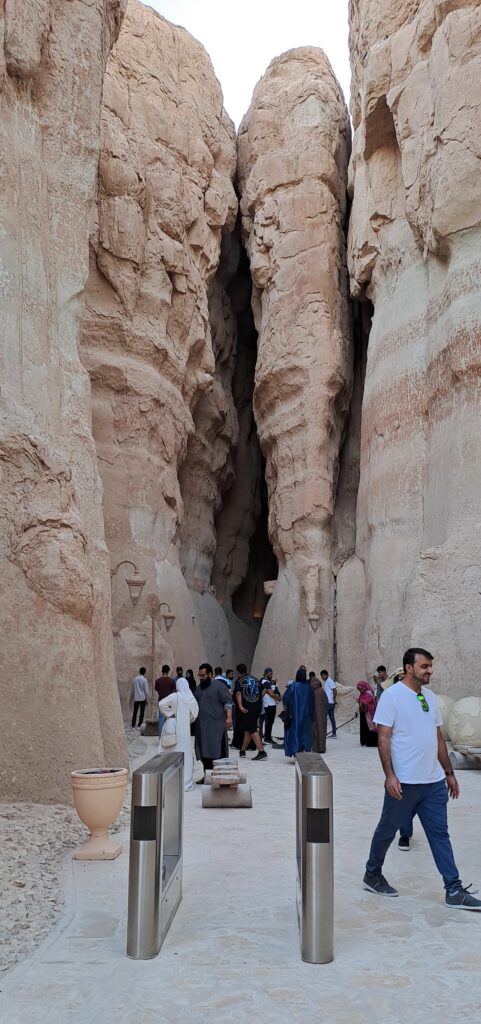
The first thing that fascinated me about the Al-Qarah mountains was how different they looked from the solid and rugged mountains I had seen before. Al Qarah Mountains looked almost as if they had been made from clay or play-do. The sides of the mountains looked as if they were shaped and filed to give an even look while its top looked as if they have been shaped round and flat by somebody’s hand.
This difference in the outlook of the Al-Qarah mountains, as I later found out, was because these mountains were composed of sedimentary rocks. Sedimentary rocks are one of the three types of rocks (the others being igneous and metamorphic rocks) that are found on our planet and are formed by the gradual accumulation and compression of sediments over an extended period. These sediments encompass a range of materials including sand, silt, clay, and organic matter, which settle and solidify under the weight of geological forces. Unlike the hard and resistant rocks typically found in mountainous regions, sedimentary rocks have a certain malleability due to their composition and formation process. Blowing winds and flowing water have the ability to sculpt and refine the surface of these rocks, resulting in their distinct and shaped appearance.
The Caves
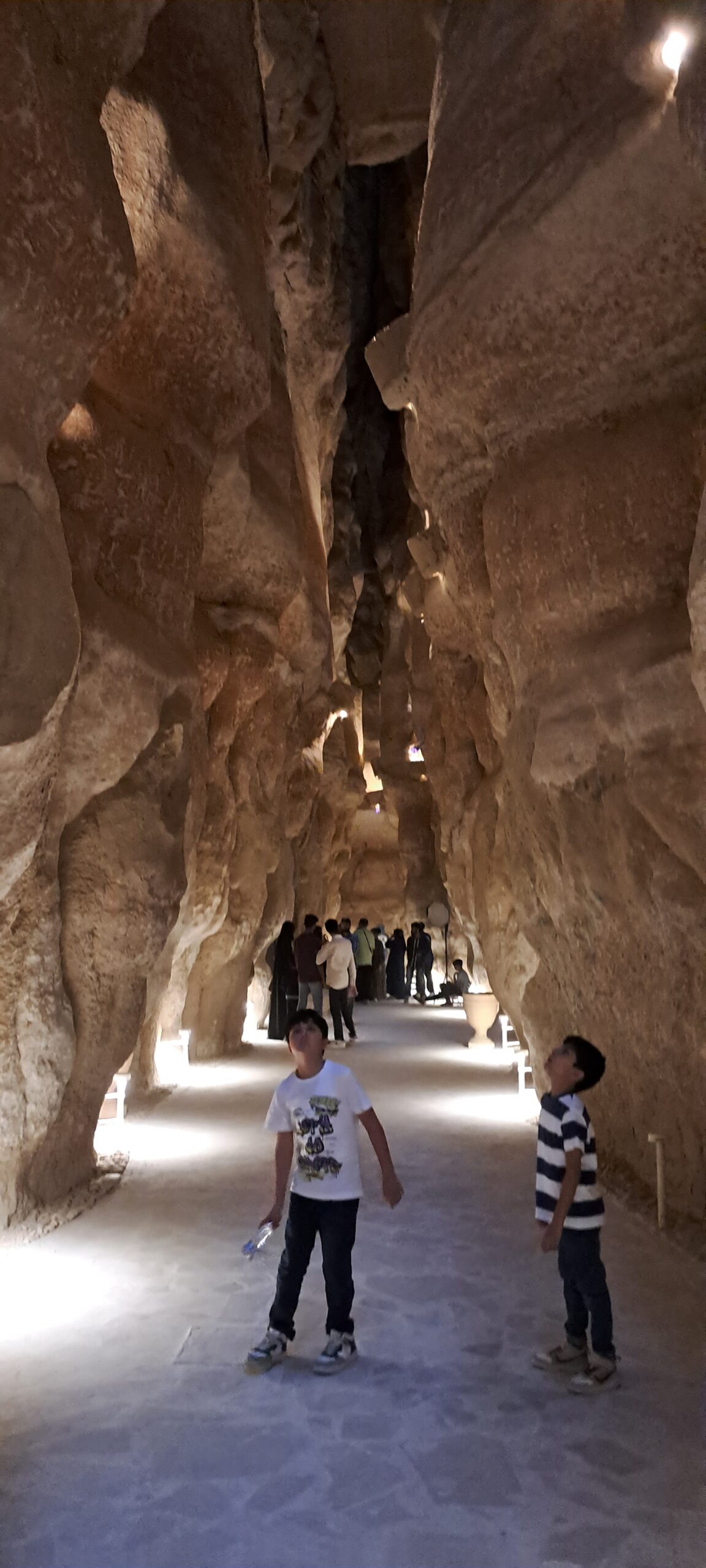
The caves are the major tourist attraction of the Al-Qarah mountain range. The lead-up to the cave is majestic. Slowly we walked up a well-lit path, made tourist-friendly by placing benches, lights, and spots for taking pictures. Normally entrance to caves is small and one has to crawl or at least bend to get in, but that was not the case here. We could easily walk inside as if we were passing the grand entrance of a royal palace.
As we entered the caves, we noticed that the temperature inside was way cooler than what we were experiencing outside. Later, I read a bit about it and found that caves have their own climates due to insulation from sunlight, existent or non-existent passage for airflow, and geothermal heating. It is a fascinating thing to read and research about. So do read up on it!
The walkway inside the caves is well lit up and there are many opportunities for taking stunning pictures. We even found a photographer who had set up his camera and flashlights, for people wanting a more professional photo.
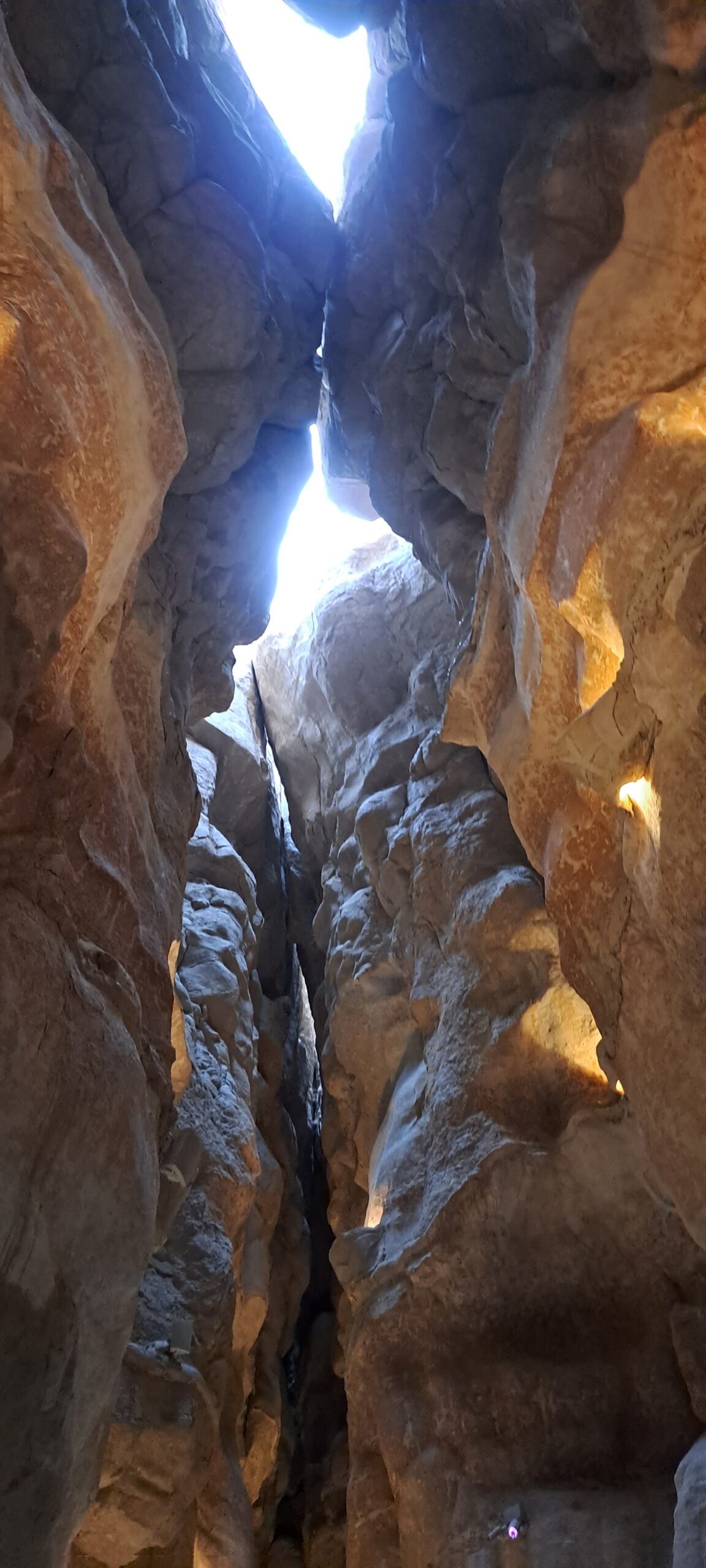
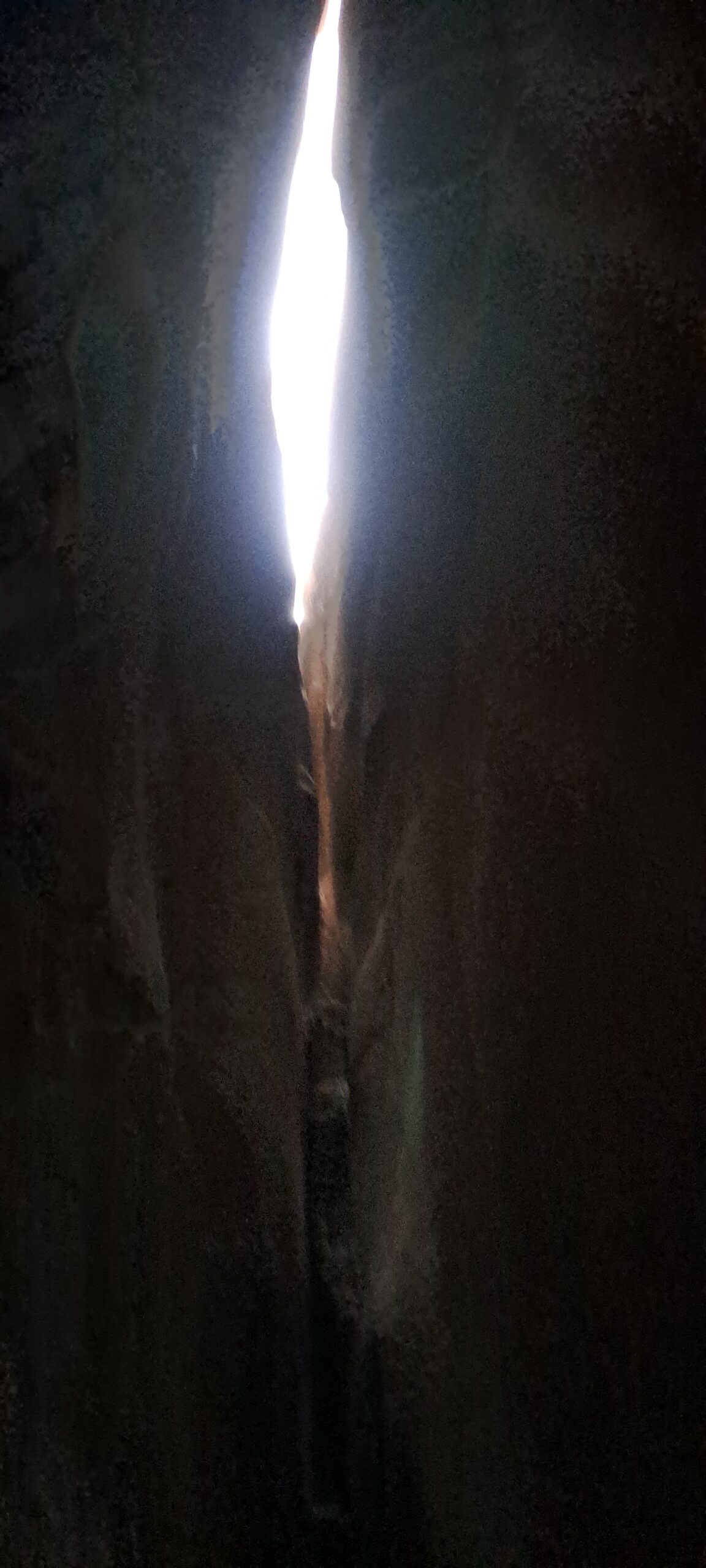
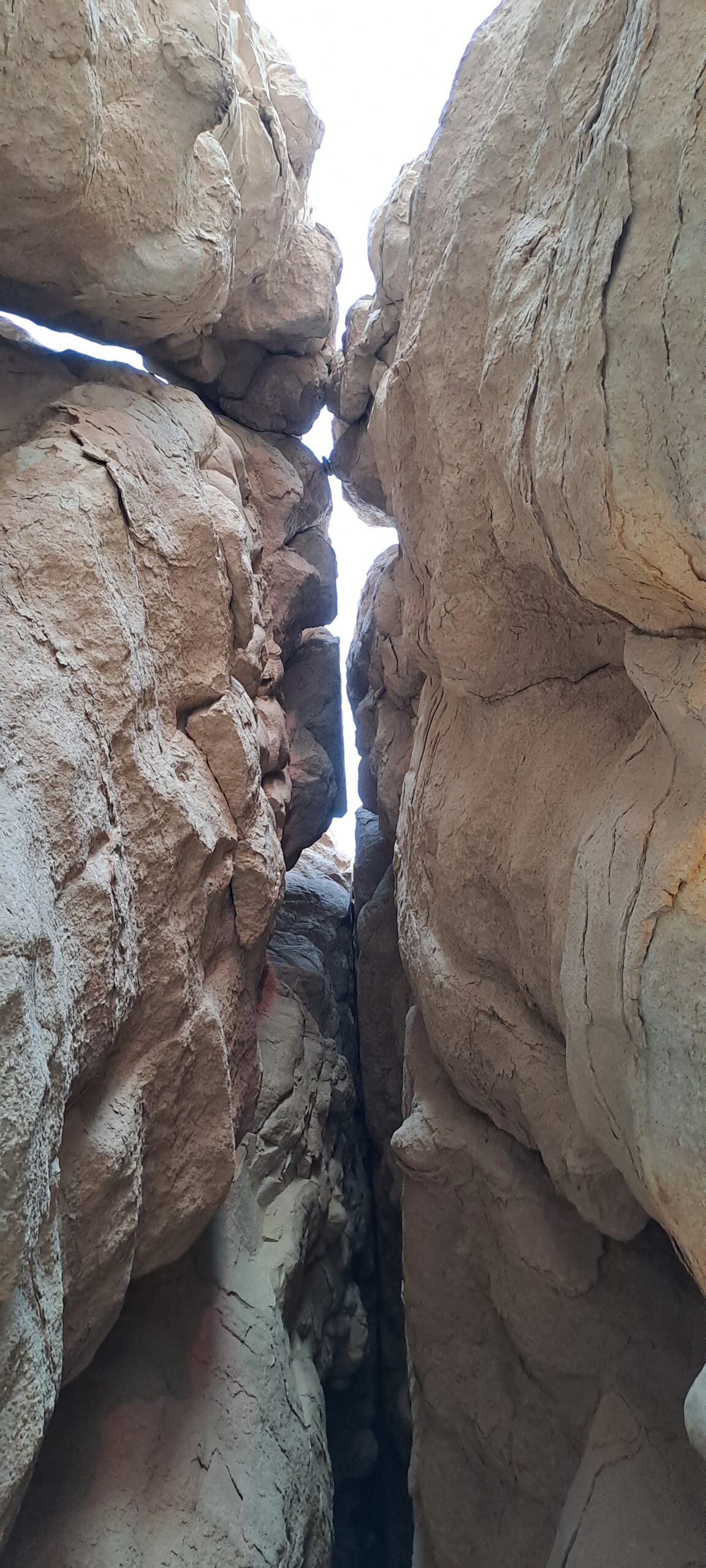
There were many passages inside, some lit up artificially, some by sunlight making way from the roof of the caves, while some were dark, and we had to rely on torch lights from our mobile phones. All the passageways were dry, but I think that during rainy seasons, there might be some sort of water falling from the top. It took us around 30 minutes to explore all the passageways. All of us, more importantly the kids, were super awed from what they saw especially when they saw that some of the rocks seemed to be hanging from the roof.
There were no recognizable patterns or organization of these passages inside the caves. Some of them were wide enough for 2-3 persons to pass through them at a time and some were so small, that only a kid can pass through. Passing through them and thinking about what I was seeing, I wondered how they were formed in the first place. These caves even had no pattern or symmetry like some of the caves shaped by human civilizations like Petra. Was it because these mountains were submerged under the sea once, and water used to flow through these caves, shaping them? Did the water recede underground or due to tectonic shifts the mountains appeared above the surface? Considering that Al-Ahsa is an Oasis this was the likeliest of all possibilities.
Whatever the answer to how they were formed, one cannot help but be amazed at the many different expressions of our Creator. When I design or create something I fret about ordering and arranging things into a symmetry, but here I saw that our Creator has created these mountains and many similar structures worldwide, without following any geometrical shape, design, or symmetry. And yet they look so majestic and spell bounding! One can only wonder at the powers of Allah, who makes all of this happen by just saying, Kun.
About the site
A UNESCO World Heritage Site: Al Qarra mountains and the Al-Ahsa province in general is a UNESCO world heritage site and one must include it in their bucket list to explore and see for themselves why it has been nominated as such. More information can be read from the UNESCO website.
Tickets and Services: Tickets were 50 SAR for Adults and for children under 13 the entrance was free. The location also has a small museum, a masjid, clean washrooms, small shops for souvenirs and groceries, and a restaurant. The exploration time takes around 30-40 minutes and even more, if you want to climb up the mountains and look at the view, which is definitely recommended, especially to witness the sunset.
Presence on Instagram: @landofcivi is their Instagram handle. I messaged them about their timings and received a reply on the same day, which was really cool of them.
Due to the easing of restrictions on Saudi Tourist visas, it was finally possible to undertake the journey of Umra from Kuwait using one’s own vehicle after a decade-long hiatus. We all were quite excited. Our family had grown from 4 to 6 and the older ones are teenagers now, making this their first adult Umra.
To ensure a safe and smooth driving experience, especially when you have a 14 year old car, adequate planning and preparation is very necessary. I began the planning around a month before.
Before The Journey
Applying for Saudi Tourist Visa. The entire visa application process is online and very simple and straight forward. After filling in the form and paying the fees, the visa is sent to your email address within 5 minutes. Impressive!
Per person the cost was around 35 KD, which is not very cheap and not very expensive. Considering you can enter Saudi Arabia multiple times during a year, I would say that the price is just about right. The only hitch in the process was the multiple payments that one has to make for a single visa application e.g. Medical Insurance, Processing fees, visa fees etc. In all, if I remember correctly around 3-5 payments have to be made for one application, so if you, like me, are applying for your entire family from the same credit card, then your credit card will get blocked. In which case, either call your banking service provider and have it unblocked or use a different card.
Car Servicing and Repairs (if needed) Since the entire journey was to be made in our car, therefore, I had my car serviced and checked from the main service center. I also took a second opinion and then undertook the necessary repairs. Since we were going in winters therefore I didn’t bother myself with AC checkup and repairs. A day before, I had the tires rechecked, since they have to bear the brunt of the journey 🙂
Read and revise the steps of performing Umra, the restrictions of Ahram etc. Umra, like all acts of worship (ibadah) must be performed according to specific requirements and steps. Neglecting any of them may render the entire effort void. Also, it is not something that one does regularly, therefore we gathered as a family and revised the steps and requirements, explaining the entire process to ourselves and our kids, with special emphasis on the mental and spiritual conditions (adaab) that must be maintained during the journey. While the older kids had to adorn the Ahram in the proper way, for the smaller kids we bought stitched Ahrams, so that they too, get feel and understanding of Umra.
Planning the Route Finalizing the route is also an important step and must be done before the start of the journey. Your hotel bookings, packing etc are all dependent on that. There are two main options that one can chose from, a brief detail is provided for each option below.
Madina First.
The first option is going to Madina first, which is nearer to Kuwait. Around 12 hours drive from our home in Kuwait to the hotel in Madina (with one hour of border time), provided you prescribe to the speed limits of the various highways. The time only caters for small breaks like fuel and prayers.
Makkah First This is a longer route that takes around 14-16 hours with 1 hour of border time. The stoppages would have to be minimum (only petrol and prayer breaks). In order to take this route one has to leave quite early in the morning i.e. around 2 AM, so that maximum trip is covered in day light. The last 2 hours of the trip is a fenced and properly highlighted highway, with a speed limit of 140. so driving at night shouldn’t be much of a problem.
During the Journey
We decided to go with the option # 2 i.e. Makkah first, therefore we left our home around 3 am. Passing the border proved quite cumbersome for us as it took us over 3 hours to get through. This was quite unusual as most of my friends passed through within 1 hour. Our delay was mainly due to some unexpected rush at the fingerprint counter and an unusually long line at the security checks.
Speed Cameras Quite early I noticed that there were many speed cameras installed at various points. The cameras are supposed to detect not only high speed but also seat belt and mobile phone usage. A few miles in, I decided to put my car in cruise control i.e. set the prescribed speed limit and enjoy the view instead of focusing on following the speed limit.
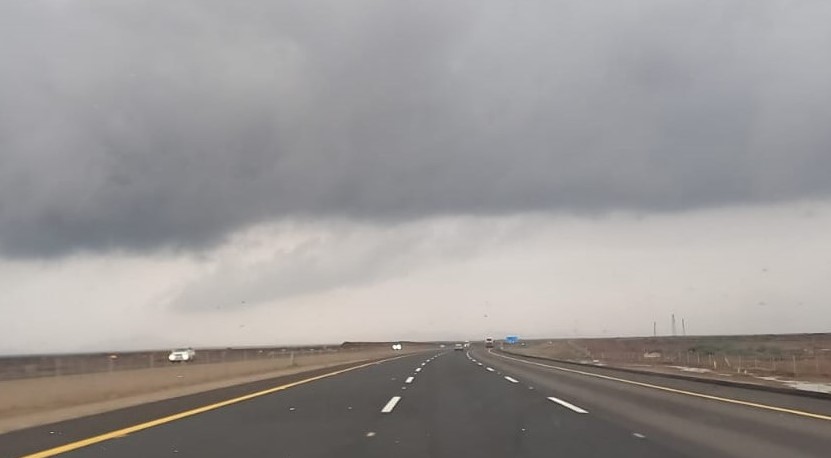
The Views! The weather was generally very nice and kept on changing throughout starting from foggy to raining to extremely windy towards the end. But, Alhamdolillah, the visibility stayed clear throughout. The nice weather plus the ever changing views made it a drive to remember. While everyone slept in the car, the calming silence allowed me to engross myself in the wonders of nature around me, so many I was able to see and capture, and so many I just drove by without noticing. The entire experience brought out the meaning of phrases like ‘Life is a journey’ marching in my brain.
Life Is a Journey!
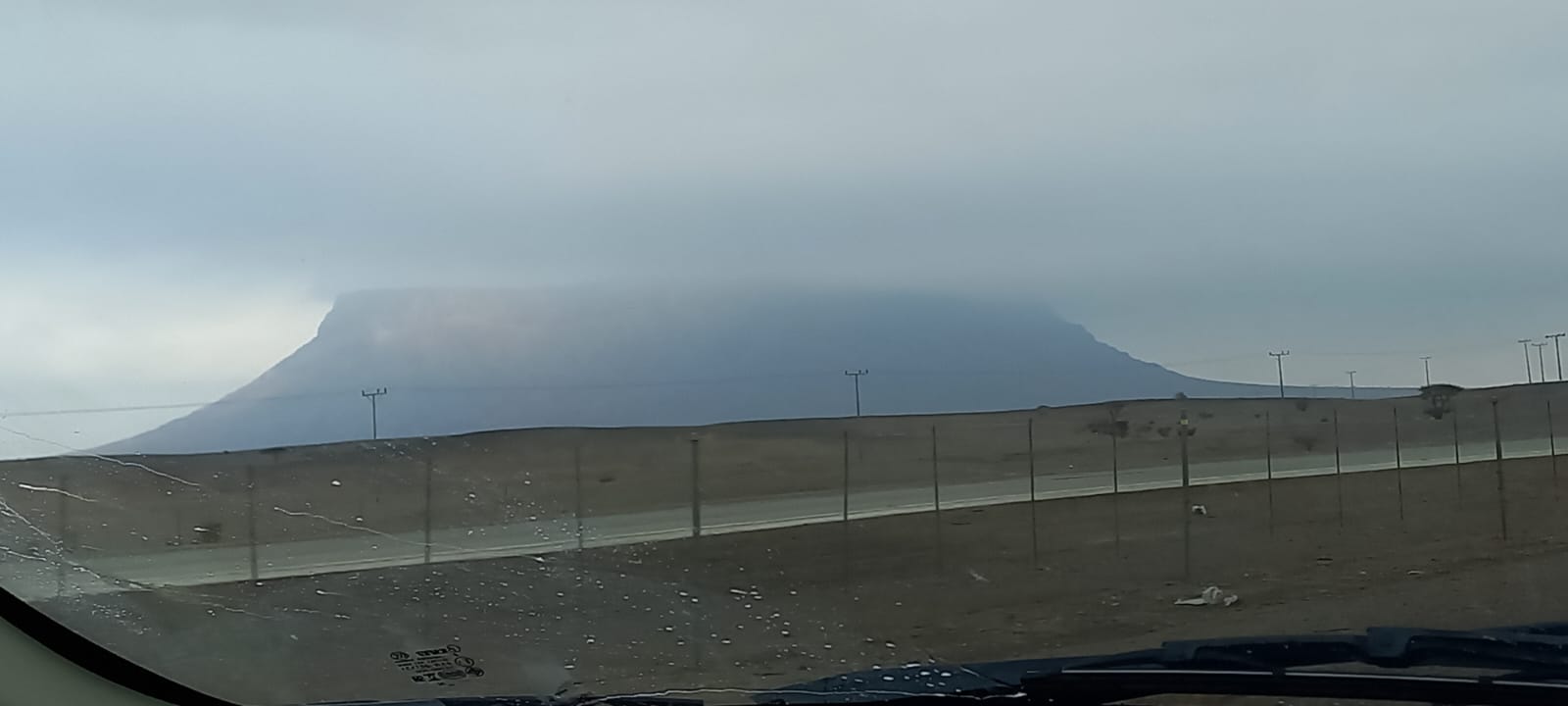
Driving through the vast and diverse lands of Allah allows us to see nature changing it’s colors, shapes and sizes. Some areas are fully and some partially developed, but the most serene were the areas that offered nothing but raw nature. Wonders, like a lone green tree standing in the middle of the desert, looking both peculiar and perfectly placed, or the silky and shining sands changing it’s colors every few hundred kilometers or the clouds coming down to play with a mountain. All felt like master strokes by the Master.
Clouds Covering A Mountain
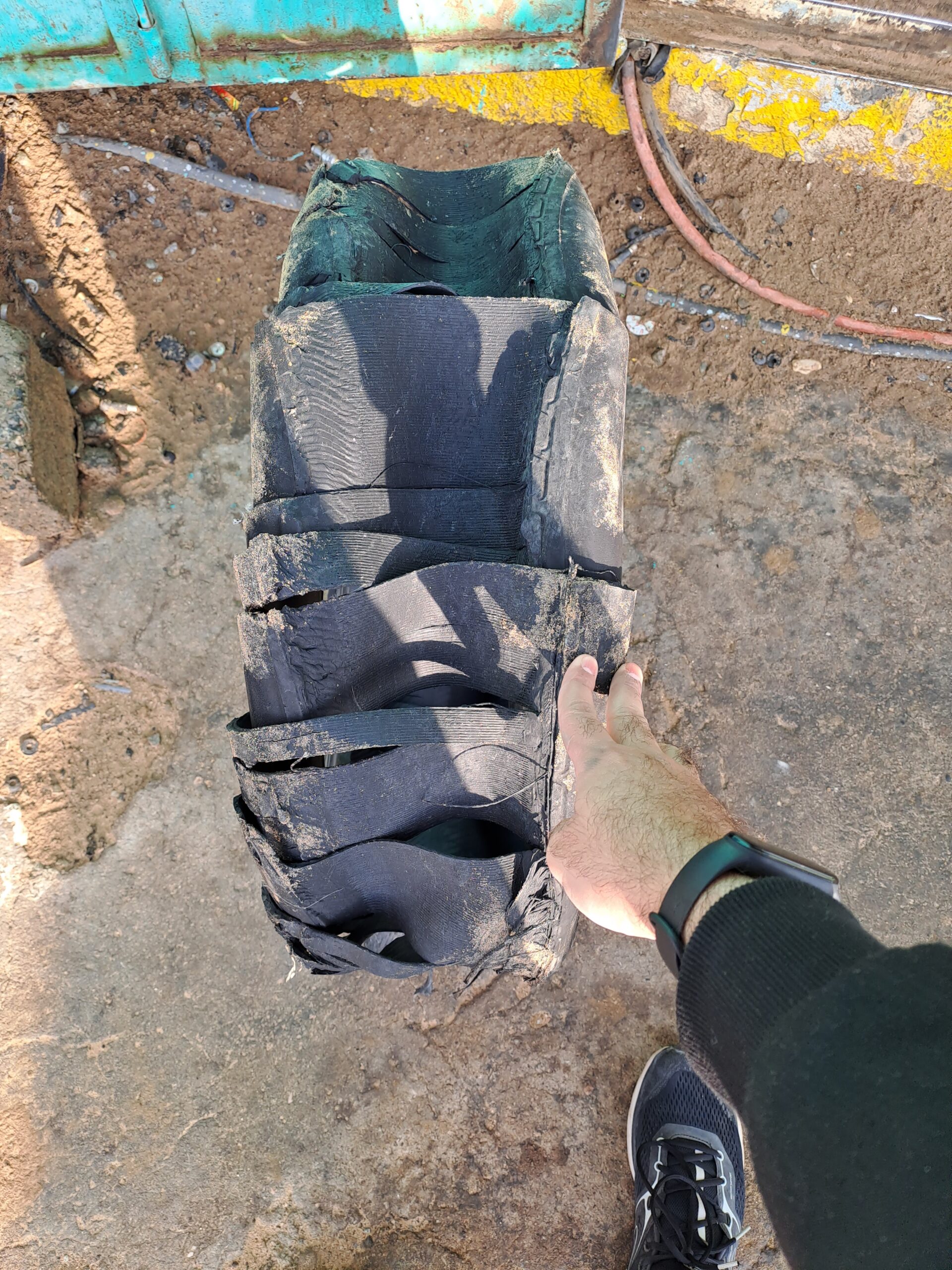
My Busted Tire
Safety The road conditions, throughout, were pretty good. I didn’t notice any kind of rash driving and the highways were properly patrolled. There were a lot of sign boards along the way highlighting the emergency call numbers. Towards the end of my journey my tire busted. Within a few minutes, while I wondered what to do and whom to call, a police patrol arrived and helped me in calling a maintenance truck. The maintenance truck arrived in around 20 minutes and did the needful. On a nearby shop I was able to find a new tire.
All the highways were in excellent condition, except for a small patch where we had to take a detour.
Pit Stops Although I noticed that many old petrol pumps were closed, maybe due a government initiative, but there were still plenty open ones available. Some of them quite cool, flashy and well maintained. I wondered what is the science or maths of building such petrol pumps, as I noticed some were pretty close to each other while the others a few hundred kilometers apart. Definitely a topic for a later blog.
The only thing I found wanting though, was the absence of mobile service providers. I had to practically stop in a few cities to search for an open mobile service provider as I needed to get a SIMM card. Although, due to it being a Friday, most of the shops were supposed to open after 4, but I found a few were closed even after 4.
The route also took us through various cities like Affif, Mujammah. So in case of any tiredness etc, a hotel can be taken in any of these cities. Due to some issues in the car, we made a stop in Dhulm, which is the last city before Taif. The price of the room was reasonable SAR 200 with excellent facilities for the price.
Before going into Makkah, we stopped in Sail Al Kabeer which is the Meeqat for people coming from Kuwait. We took a small room there for an hour and took a bath and adorned the Ahram. There are many shops selling Ahram and related stuff at a much cheaper price than Kuwait, so if one has a need then it can be fulfilled from there as well. After adorning the Ahram, we set off towards Makkah.
The Last Mile! With our car echoing with the sounds of Labayk and our hearts filled with anticipation, we headed towards the holy city of Makkah. The proverbial last mile was around 70 Kilometers and it is hard to describe it in words. We reached Makkah and after a few twists and turns were able to reach Kudai car parking. From there I moved towards our hotel and then eventually towards Masjid-e-Haram for performing Umra.
More about our experience inside Makkah in Part 2 of this blog. And then the trip to Madina and back to Kuwait.