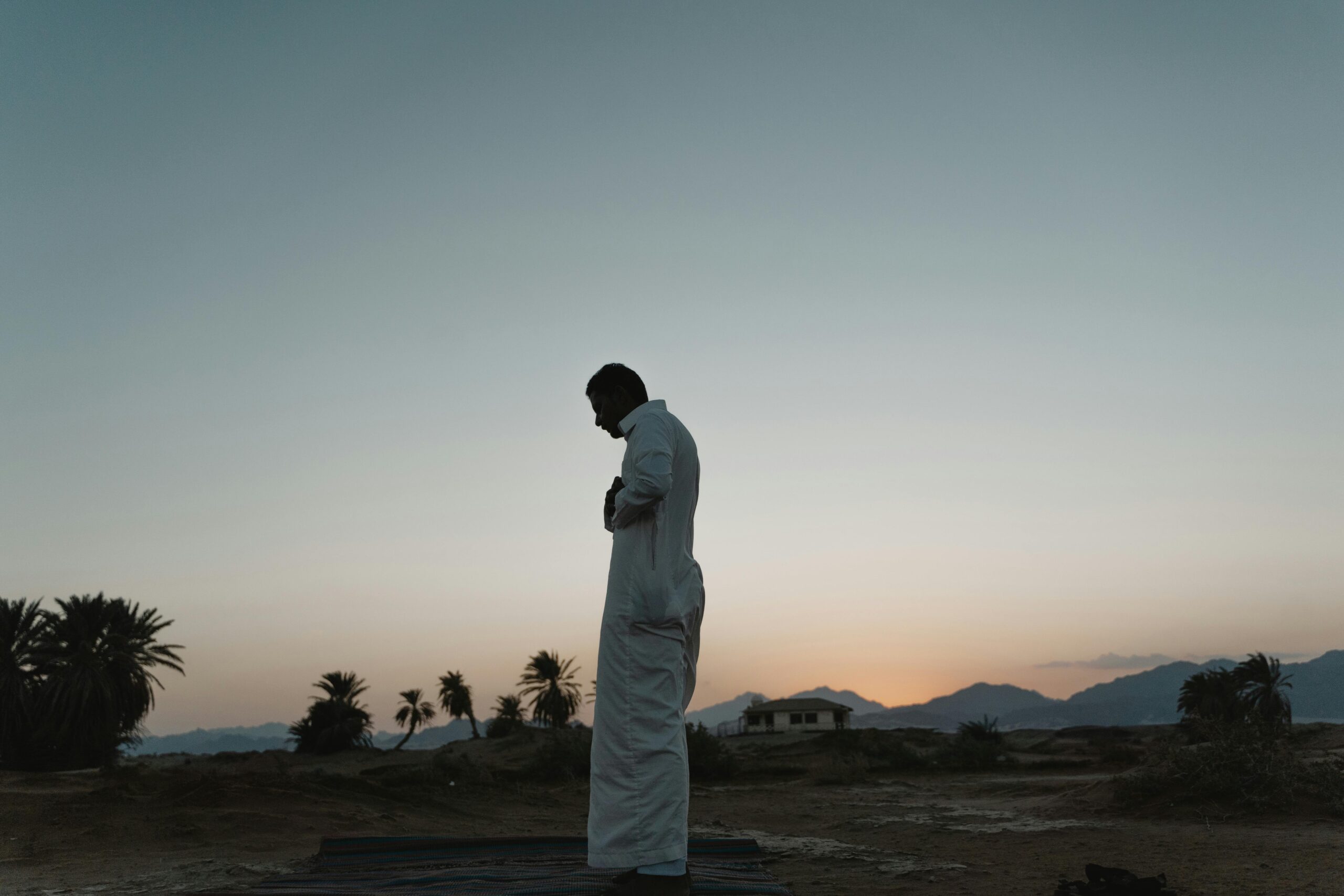
How can I instill this in the hearts? My heart desires that everyone comes to the right path in such a way that the glory of Islam is manifested from their every action, just as people used to accept Islam by observing the respected Companions (Sahaba-e-Karaam); We should all adopt the Sahaba as our role models. The betterment of this world and the faith is hidden within this.
It is a factual matter that if Muslims reform themselves and religion becomes firmly rooted in them, then and only then can Islam be established. Whatever worldly calamities are swarming us nowadays, Insha’Allah (God willing), the situation will completely turn around in a few days. And although there can be intellectual arguments for this, I wish I could reveal the experiential (spiritual/inner) portion of it, but I do not have the power to express it.
Notes to myself
After listening to numerous lectures from Ulema-e-Karaam, my belief has been strengthened: I have to change myself and align my surroundings (my own personal being, my home, and my office) with the teachings of Islam rather than someone else to do it for me.
I realized that the answer to the question ‘When would Islam become a power again?’ is not that “they” (the people, the government, the army, the bureaucracy, etc.) have to change; the answer is that “I” have to change. This change will not come through bullets or force; it will only come when we change ourselves.
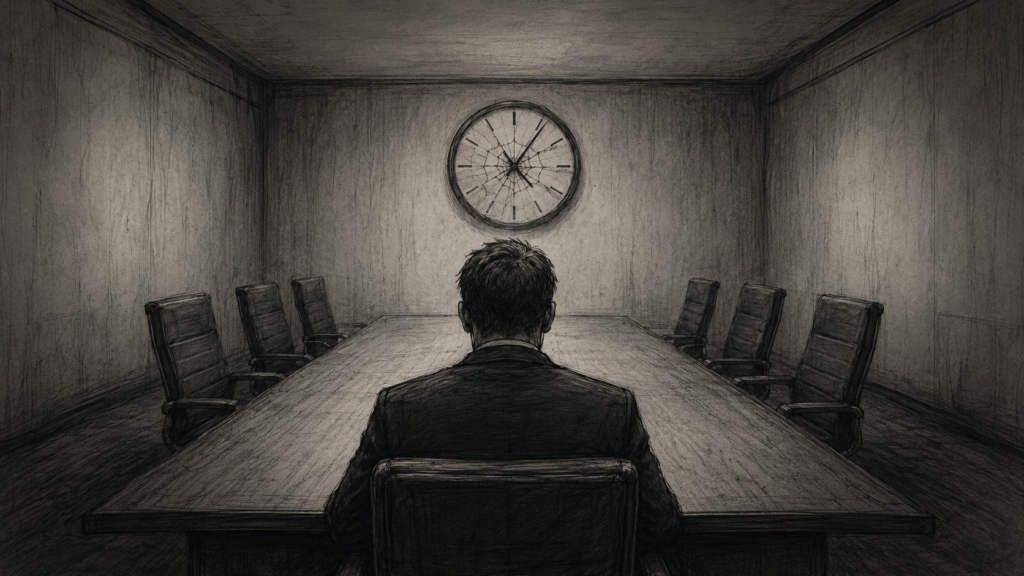
He walked into the meeting room, followed by his men. Some stayed outside guarding the door, while others accompanied him inside. The table in the center of the room was already full except for the chair at the head of the table, which he took immediately. Putting his elbows on the table, he ordered
‘Let’s start’
A few people at the table scrambled to load the slides on the main screen. He was not interested in the preliminary briefing. He looked up at the wall in front of him at the clock.
Tick. Tick. Tick. Tick.
He told them to jump directly to the numbers, which his team did immediately. Proud smiles on their faces. There were just two numbers on the slide.
70,000 killed. 33,000 children.
He moved his elbows from the table and relaxed his back on the chair. A smile entered on his lips. He looked away from the slides. But his eyes went back to the clock.
Tick. Tick. Tick. Tick.
He forced the sound aside, adopted a business-like tone and addressed the men at the table.
‘These are very good numbers. Better than what we planned for the week. Well done! How is the media being handled?’
‘Contained, Sir’, said a man in the suit, ‘Their silence already bought. ‘ A few voices here and there, but we are successful in numbing them down with crap’.
He looked towards his foreign minister and raised his eyebrows
‘The usual, Sir, ’ he said, smiling. ‘All governments are compliant. Controlling protests, condemning us in public, giving us thumbs up in private, ’ he raised both thumbs as he said it, his two front teeth jutting out like a rabbit’s.
Ugly, thought the man. But good at his job.
The man was happy and looked satisfied. But the clock, he noticed, kept on ticking.
Tick. Tick. Tick. Tick.
He forced the sound aside again and smiled to his team.
‘Someone said that they had a surprise for me’
Everyone looked at each other and smiled. Sir, a special video for your birthday. Someone clicked on the remote and a video started playing.
Soldiers were firing at civilians. Men, women, and children were falling like dead leaves. Finally, when no civilian was remaining, a soldier bravely walked up to one of the corpses and dragged a child out of his dead mother’s protective arms. The child was alive. The child tried to run. But another brave soldier timely shoots at his feet. The child fell but started to drag himself towards safety, which didn’t exist. The brave soldier who had released the child from his mother’s arms walked up to the child, and puts a gun to the child’s head, and looked bravely into the child’s eyes. The child didn’t know what was happening or was going to happen. The brave soldier solved the puzzle and shot him twice. Life went out of the child’s body like a cool breeze blowing from east to west.
The man at the head of the table started clapping.
‘Bravo. Bravo,’ he yelled. As if his favorite team had just scored a goal.
Everyone in the meeting room started clapping with him. As the clapping died down, the man sat back on his seat. He felt powerful. And no one, no one was able to stop him.
‘No one will ever be able to stop me, ’ he thought to himself. He sat back on his chair.
‘A job well done, gentlemen. But this isn’t over. Next week, I want these numbers doubled’
Everyone nodded excitedly as they started to leave the room and prepare for the next week.
The room grew silent. He looked at the clock again.
Tick. Tick. Tick. Tick.
“What are you looking at?” he asked the clock mockingly. Then he smiled cruelly. “The most powerful man in the world?”
“No,” said the clock. “You are not.”
He looked up slowly.
“Oh? And who, exactly, stands more powerful than me today?”
“It is I. Your humble friend. Time. The most powerful. Today. Yesterday. Tomorrow. I am the most powerful being God has created in this world”
“You?” He gave a short laugh. “You hang on a wall all day.”
“True,” said the clock. “That is probably why men like you spend their whole lives pretending I am not there. Until I am the only thing left.”
His smile remained, but only barely.
“What do you mean?”
The clock took the shape of a man and began walking slowly towards him. The man panicked. He was about to call for his guards when the clock spoke.
“Don’t call them. They will only think you have gone mad. And then your end will come sooner than you think. I will not hurt you. Not yet, anyway.”
“I am not afraid of you,” the man said, his palm turning into a fist. “I control you.”
“No,” said the clock, tilting its head. “You don’t.”. And then it leaned closer.
“I. Control. You. And many men like you.”
The clock walked up to him, patted him lightly on the head, then on the shoulder. Then it pulled out a chair and sat beside him, close enough for the man to hear the ticking from inside its chest. The same dreaded ticking he has been trying to force away from his mind.
“See, you are a proud man. Cruel, yes. But proud. You are pleased with yourself because you have killed thousands. But tell me, do you know how many I have killed? Millions.
Millions upon millions.
You kill with a button. From a distance. Most of your victims do not even see you coming. They do not even have time to understand their pain.
Except that poor child, perhaps, who had just a few seconds.
But I am not like you. I do not kill in an instant. I wait. I watch. I take things away slowly. Your strength first. Then your sleep. Then your pride. Then your mind.
You will beg for death. But death will not obey you. Death will look towards me, its master, and ask me, ‘Is it time?’
You may put a gun to your head and pull the trigger. You may swallow every pill in your palace. But even then, it will not be you who decides. I will choose when you die. Me.”
The man was visibly shaken, but he forced out a nervous laugh.
“You are just a clock,” he said. “Tick. Tick. Tick. That is all you can do.” He tried to look brave. But he knew. Somewhere deep inside, he knew.
“Ah,” said the clock. “There it is. The brave face.” It leaned closer.
“But I can see behind it. I can see your eyes. Your heart. Your mind. Even the darkness in your soul.” The clock paused.
“I can smell the fear in your sweat. I can see it in your trembling hands, in your pinched brow, in the way your breath catches before every word.” It smiled.
“You are afraid. Terribly afraid.
And you should be.”
“Why should I be afraid?” he asked, trying to sound relaxed.
“Because you know your end very well,” said the clock. “You are a literate man. You have read history. You know what happens to men like you. One day, you will retire. Or you will be removed. Surely you will be replaced. And then you will lose everything.
Soon, another man will sit in this chair. Another man who will believe that he is the most powerful man in the world. Perhaps he will come for you. Perhaps he will not.
But I will.
I will come for you, my dear friend. In fact, I will never leave you. You will be sitting with your family. Playing with your children. Bathing. Swimming. Eating. Laughing. Even making love. Whatever you are doing, I will be there. With you. Inside you. Inside your brain.
Ticking. Tick. Tick. Tick.
Slowly at first. Then louder and louder. You will try to silence me. But fail. You will try to fight me. But fail. You will try to drown me, in drink, in drugs, in anything that can cloud your mind. But fail.
I will keep ticking. I will keep eating you from inside. You may escape the courts. You may escape the mobs. You may escape the men who hate you. But you will not escape me. Because I am your friend.
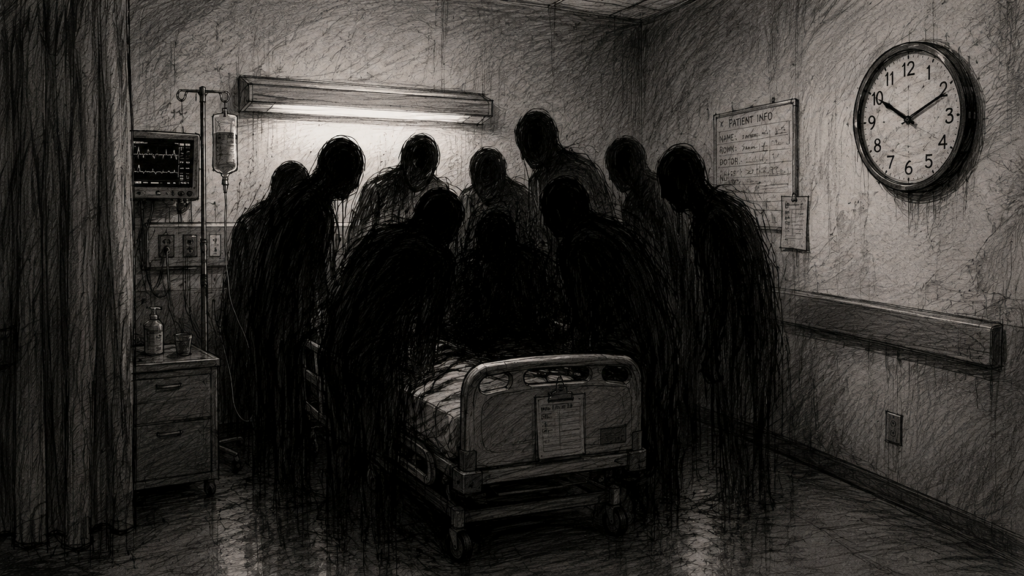
Little by little. I will take your strength. Then your sleep. Then your peace. I will dim your eyes. Dull your ears. Crack your bones, one by one. I will make every breath feel borrowed. And when the end comes near, you will know it. Because you would be able to see them.
‘Who?’ he asked, trying to drink water from the glass in front of him, but the glass was empty. His throat was dry.
All the ones you have killed. They will begin to visit you. Eager. Waiting. Almost joyful. At first, only in dreams. And then, outside of them. They would be right there in front of your eyes. No one else can see them except you. They will stand there, looking at you, straight into your face, into your eyes”
“I did what I need to do.”, he said, growling.
“Oh, and surely I will do what I need to do,” said the clock.
“I will command death to become an itch inside your body. You will scratch and scratch, but you will not be able to reach it. You will feel helpless. Just like that child. And then, then you will see them.
Dark men, with dark faces, and dark shadows – making everything dark around them. Everything inside and outside of you will become sombre and black.
And then they will pull your soul from your body. It will feel like wet wool caught in thorns being dragged through your veins. You will scream, but no one will hear you. You will weep, but no one will see your tears. And then do you know what will happen?”
“I will die. ‘Everyone has to die. And so will I’”
“No,” said the clock. “No. No. No. That is where all of you are wrong.
You will not die.
Your death will die.
Do you understand that? Your death… will die!
You, on the other hand, will live forever and ever. People will mourn your passing. Perhaps they will give you a grand funeral. Perhaps they will write your name in history. But you will not be dead. You will be alive. More alive than you have ever been. And then your punishment will begin.”
The man looked nervously at the clock.
“Death will not end your pain. In fact, your suffering will only begin. Dark forces will come and beat you until there is almost nothing left of you. Then you will be made whole again. Not as mercy. But so the pain can begin again. They will beat you again. You will feel every blow. You will cry. You will scream. You will beg. But they will say, ‘Didn’t you know? Did no one tell you?’. And you will say…”
‘Yes. I will say Yes’
‘Good boy, ’ shouted the clock in glee and triumph, patting him on his back. ‘You will say yes. YES! Yes, my dearest friend, who was there with me from the time I was conceived till the very end, TIME, had told me. Showed me all the signs. But…’ the clock turned his fist into a mic and placed it in front of his mouth.
‘But I didn’t listen. I was proud. I wanted to feel powerful. I wanted people to envy me. Fear me.’
‘Every moment after that’, said the clock somberly, ‘your torture will only increase. The pain, the anguish, the anxiety, and most of all the sorrow. The sorrow of what you have done. The price that you have to pay for your deeds. The sorrow will eat you bit by bit. You will shout. And you will beg mercy. But no one will listen to you for centuries and centuries. Till one day, a window will open.
That child will look down at you from the skies, from among endless green gardens, a green so rich you have never seen its like before. And do you know what he will say?
He will say, “You thought you ended me.”
The clock leaned closer.
“But you did not. You thought you killed me. But I am alive. You thought you Won!. But you lost!
The child will say that from the day you snatched me from my mother’s dead arms was the day my trial ended and your fate was sealed. Since then, I have had nothing but peace and you nothing but anguish, sorrow and pain. I have my mother. My father. My brothers. My sisters. We eat what we want. We have all that we need. We know no fear. No hunger. No pain.
You did not destroy me. You only destroyed yourself.
The man was shaking terribly now. His throat was dry.
“You will beg them for mercy. For forgiveness. But the window will close. And you will return to the same dark fate.”
The clock leaned back in its chair. The man looked at it. But the chair was empty now.
He turned towards the front wall. The clock was there again, hanging in its place. Looking at him. Smiling at him.
“Tick. Tick. Tick. Tick,” it said.
Then it whispered, “I will catch up to you.”
The man broke. He pulled out his gun and fired. Once. Twice. And then again and again till the chamber was empty. His hands were shaking, but every shot struck the clock. The glass exploded. The frame cracked. The hands twisted. Pieces flew across the room and scattered over the table and floor.
His men rushed in at the sound of the gunshots. They found him standing there, breathing hard, his gun still raised. His face was pale. His shirt clung to his back with sweat. In the few minutes they had been outside, he seemed to have aged a hundred years. They looked from him to the shattered clock. Pieces of it lay on the floor. Pieces lay on the table. A broken part still hung from the wall.
“Sir? Is everything all right?”
The man did not answer. There was nothing that he could say. There was nothing that he could ever say again. He lowered the gun, pushed past them, and hurried out of the room. His men followed. Silently, he told himself he had killed it. At the very least, he had stopped that mocking tick-tock of the clock.
But then, from somewhere deep inside his brain, it returned. Clear. Slow. But getting louder.
The Messenger of Allah ﷺ said Befriend your friend with moderation; it may be that he will become your enemy one day. And hate your enemy with moderation; it may be that he will become your friend one day
Although the disbelievers are inherently subject to abhorrence and hatred (towards Muslims), maintaining moderation is still required even in harboring animosity towards them. Similarly, maintaining moderation in both love and hatred is absolutely essential. The jurists (Fuqaha) have gone so far as to forbid the remembrance of Allah (Zikr) when it is done inappropriately or out of place; in fact, in certain contexts, they have deemed it an act of disbelief (Kufr), such as saying “Bismillah” (In the name of Allah) over unlawfully acquired (Haram) food. In short, everything has its own designated rights and prescribed boundaries.
Our brothers (Muslims) lack the disposition for obedience and following leadership (Ittiba). Even if their commitment to faith (Deen) is not perfect, they should at least possess the capacity to follow someone. This is precisely why they are ruined.
Another reason is that they completely lack internal discipline (Nazm) and adherence to principles. If they work on combining proper organization on one hand with faith on the other—then clearly the path to divine help will open.
In the era of the Companions, what numerical strength did the Muslims possess against the Byzantine and Persian Empires? Yet, they were people of faith (Deen) and were highly organized. If proper organization accompanies faith, then see what wonders unfold! Conversely, entangling oneself in a disorganized state is to cast oneself into destruction.
And Life is a trust from God; “Do not kill yourselves” (لا تَقْتُلُوا أَنْفُسَكُمْ – Surah An-Nisa, 4:29) Sacrificing one’s life for the sake of God is no small matter, but there must at least be the satisfaction and certainty that it is undeniably being spent for God’s sake alone.
To read all the blogs on the Malfoozat of Maulana Ashraf Ali Thanvi, click here
وَمَن يَتَّقِ اللَّهَ يَجْعَل لَّهُ مَخْرَجًا. Whoever fears Allah, He brings forth a way out for him – 65:2
Taqwa, as I understand it from what I have been able to gather and retain from the discourses of our honorable Ulema, manifests in both our hearts and our actions. To the best of my limited understanding, it is a state that prevents us from not only executing anything that displeases Allah but also contemplating it.
Taqwa is not a physical or paralyzing fear, but rather a fear born of deep reverence. It is the protective anxiety of risking the displeasure of the Almighty—much like an upright person who, out of pure love and respect, would never do anything to grieve their parents.
This, as the Aayat in the Malfooz mentions, is a key to getting out of any adverse situation and, in my experience, not being in one in the first place.
To read all the blogs on the Malfoozat of Maulana Ashraf Ali Thanvi, click here
When a questioner asked a question on behalf of the general public, stating that ‘People often ask/wonder about …’, Maulana Sahab advised that such inquiries should only come from the individual who genuinely intends to act upon them. Even if someone asks, simply tell them, ‘We do not know.’
This and similar Malfoozat, discourses, and lectures from Ulema-e-Karaam have drilled into my head to focus on things that I control and not to waste time even in discussing/arguing on things that have no relevance to strengthening my relationship with my creator, Almighty Allah
To read all the blogs on the Malfoozat of Maulana Ashraf Ali Thanvi, click here
Just as the ignorant among the Sufis claimed Sharia (divine law) and Tariqa (the spiritual path) to be two separate things, thereby escaping the binding commandments and forming a permanent sect—and now they see no need for Sharia—similarly, another group has claimed Sharia and politics to be separate from each other, thereby escaping the commandments, and this too has become a permanent sect.
To read all the blogs on the Malfoozat of Maulana Ashraf Ali Thanvi, click here
One of my regular practices is to read the Malfoozat of Maulana Ashraf Ali Thanvi (رَحْمَةُ اللهِ عَلَيْه). Malfoozat, simply defined, are the casual or general words spoken by someone. They are not planned discourses (bayaans) or formal articles.
Reading them makes me feel as though I am sitting in the spiritual company of Maulana Sahab. His insights are full of wisdom, and the conversational style makes the advice deeply personal and practical to implement. I often find that just a few lines (malfooz) from Maulana Sahab are worth entire, well-researched books by Western authors.
I initially tried to expand upon or explain them, but I really see no reason to do so. Therefore, I will simply focus on translating the specific passages I have highlighted during my readings—the ones that have truly stuck with me over the years. InshaAllah I plan to post regularly.
A son reflects on his father’s life, lessons, faith, and final days — a deeply personal tribute to Abu Hazur (1934–2025).
I close my eyes, and I open them. I breathe in, and I breathe out. Sometimes I speak, but mostly I stay silent. I spend my day in meetings, handling escalations, assigning work, coaching my team, and coding my dreams – always trying to do what is required of me. The daily hustle becomes tough, and I want to stop, but the world is not kind to people who stop. Minutes would turn into months and months into years without me realizing how far back I had fallen. So I put one foot in front of the other, move from one task to the next, and keep going. But sometimes everything comes to a grinding halt. The world keeps on spinning, but I just cannot move. I know that I should move and work and dream and travel and read and write and code – there are still so many things to do… but then there is you…
Your giant palms are scrubbing Nivea on my tiny 8-year-old face to protect me from the dry Abu Dhabi weather. You and Ammi are going out for a walk, and I, taking advantage of being the youngest, want to tag along. ‘It is a long walk, and you will get tired,’ warns my mother. I don’t know what long and tired mean, but halfway through, I am dragging my feet and dreading the remaining part of the walk. Suddenly, in one big swoop, I am in your arms, my head on your big chest, totally relaxed and comfortable.
After retirement from the Pakistan Air Force in 1977, you were commissioned in the UAE Air Force. That is where you worked for 17 years till you retired and moved back to Pakistan in 1994. You spent most of these 17 years alone, sacrificing for the education and health of your children. It was only after having kids of my own that I realized how big a sacrifice you made for us.
Is this what life is? Is this what we are here for? A few clicks here and there. Opening screens, closing screens. Thinking, deciding, delegating, taking ownership. Reading emails, replying to them. Sending some more emails and waiting for their replies. Eight hours per day – spent. Eight hours per day – gone from our lives.
But this is what makes money. Money that pays the bills. Enhances my quality of life. Keeps me and my family happy and secure. I can buy stuff. Buy books and read them. I can explore fascinating places with my family. I can even help people with the same money. Poor people. Unhealthy people. I can support causes. I can build Masjids. I can buy shops. Start my own business. Give more jobs. Make more money.
But then what is money? A piece of paper. The entire world economy is built on this paper. Every country owes money to another country. Where is the value of money? Who decides which currency, which piece of paper, is stronger than the other? All of it is just speculation. We just assign a number and call it the value of the currency of that country. But if that country goes into war, the ‘value’ of that currency starts falling. But who decides by how much? The country with all of its resources is still there.
But why should I bother about the money? The paper. I didn’t build this paper economy? I don’t manage it. If I have enough of these pieces of paper, I will be safe. My family will be safe. If I, or my creator, keep me out of harm’s way, what do I care about the countries that go into war, or run into economic recessions? I am good and I am fine. Before, people used to work for rice and flour. Now we work for these pieces of paper. What is the big deal then? And when the time comes, when the powers that be decide to pull the plug, I will figure things out then. I will carry my skills to another company, another country. If Allah wills, I will survive. And if HE doesn’t, then who can fight HIS will?
But what if Allah wants me to do something about it? What if Allah is not happy with me just sitting and ranting and writing a blog about it?
This world is temporary. Why should I worry so much about a thing that is temporary? As long as I fulfill my obligations towards Allah, shouldn’t I be fine? Man was given limited control of this world by Allah, and man is crazy. Man will create problem after problem. And then take credit for solving those problems that he created in the first place. When the plug is pulled and the world ends, then we will realize that this was all temporary. This was all, not real. Those who had accepted the temporality of this world would survive and would be happy. And those who had thought that this world was everything. Would suffer. Heavily.
I have a special bond with nature – trees, forests, mountains, valleys, and streams, all have enchanted me for as long as I can remember. Don’t even get me started on my feelings for the ocean. In this blog, however, I will be talking about the limitless sky.
Of all the marvels of nature, the limitless sky is the most accessible. You might live in a congested city and not have the time or the resources to go and live closer to nature. Worry not. The sky is always there to satisfy your nature-loving needs.
Shaped like a dome the limitless sky is set up like a giant canvas, where ‘Al-Musavvir’ enthralls us with various strokes of HIS brush. Sometimes clouds are arranged as straight lines, sometimes round and buffy, and sometimes a mixture – random and yet not looking out of place..
Besides the enchanting nature, the limitless sky also has something mystical. At times when I have felt helpless, overcome by sorrow, or burdened by stress, I have stood and stared up at the sky, calling to Allah Almighty. And immediately grief would be replaced by relief, sorrow by happiness.
In Tafsir Anwar Ul Bayan, Maulana Ashiq Ilahi narrates the 10 benefits of looking at the sky.
1. It reduces sorrow 2. It decreases negative thoughts (waswasa) 3. It eliminates fear and doubt 4. It helps in the remembrance of Allah 5. The heart fills up with Allah’s greatness 6. It removes harmful thoughts 7. It is beneficial during melancholic (Saudavi) conditions 8. Provides comfort for the longing heart. 9. Bring closeness towards family and friends. 10. It gives a direction for us to make supplications (duas)
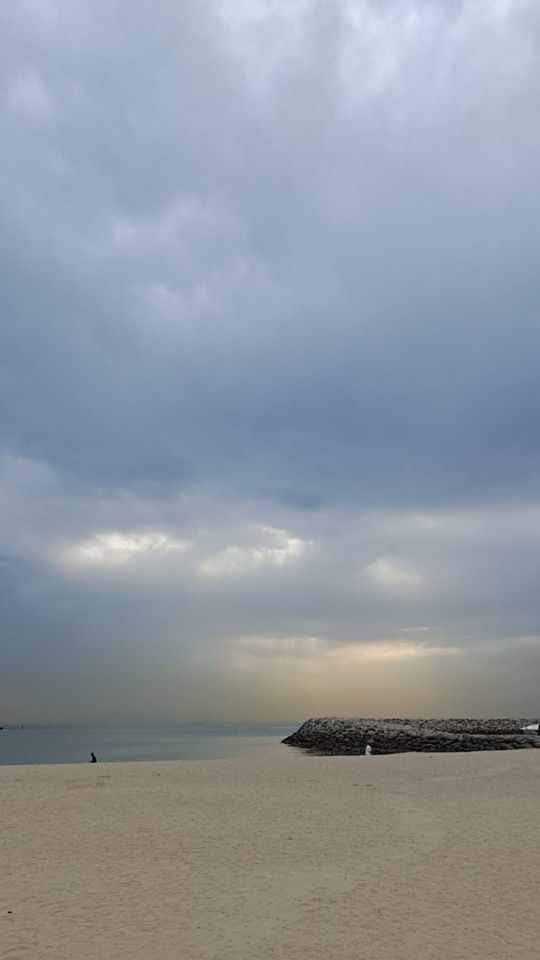
Even when the sky is clear it still manages to dazzle with a variety of colors merging into one another.
And then, as if providing a final crescendo of an already breathtaking performance, the sky decides to participate with other wonders of nature like the never-ending ocean and the strong as-ever mountains. The views are just Enthralling and Captivating.
The limitless sky is accessible to everyone. Rich or Poor. Busy or free. Traveler or nontraveler. The limitless sky is accessible to everyone – including you!
No matter how busy you are, I hope you can find a few minutes to pause your life and look at the sky (hopefully not while driving or crossing the road). And when your heart is filled with wonder remember to remember the ‘Al-Musavvir’ in HIS own words.
23:14 So, glorious is Allah, the Best of the creators
Sometimes words are desperate to come out of my brain. They are protesting inside and shouting at me that they will not rest till they are on paper. And sometimes, like now, there is nothing. Silence. Nata. Zero.
It is in this state that I am not writing but fighting. I struggle to find the sweet spot where ideas are translated into words, which string together to form sentences that combine into paragraphs. But in ‘Fighting with Writing’ that does not happen. Either the ideas or the words or both refuse to come out. Refusing like a stubborn child who wants ice cream.
This whole ‘Fighting With Writing’ thing makes me wonder, ‘Am I actually the one who is writing?’ When the words are coming ‘automatically’ is it me who is putting the words on paper or am I just a tool through which someone else’s stories, ideas, and words are oozing out?
When I am writing, almost automatically, I find myself doing fewer look-ups, less editing, and even fewer corrections. The whole piece just comes out and settles itself nicely on paper. Like when I wrote ‘Along Came A Virus’. The idea came to my mind when I was tired, had called it a day, and was on my bed hoping to sleep. But the eventual blog had other ideas. The words started shouting in my head, refusing to let me sleep. So grudgingly I came and sat on my computer and started typing. In just a few hours it was done. Posted and even published. It is in this state that probably the best of my work comes out. (Okay I know my best is not even good enough, but I am saying best of ‘my’ work, so the bar is set pretty low 😊 )
This fighting sometimes turns pretty violent, wherein, I am prepared to close the screen, toss the pen, and sometimes even delete my blog and everything I have ever written. ‘Oh how light would I feel if I did it’, I tell myself. So how to win the fight and write something of value. Something that at least I would like to read. Well all problems come our way for us to find a solution and in the process, become wiser. And not everything is in the books or YouTube videos. Sometimes we have to learn by experience.
So I summon the answers from the vast spaces in my mind (which are mostly empty, dull, and boring), and I come up with these points. These would become a solemn pledge, that I promise to follow whenever I am ‘Fighting With Writing’.
Write Anyways
Open a blank page and just write. It can be a journal entry where I write manually or an empty Word document. Just open it and pour whatever is in my head.
Follow a schedule
Write after Asr prayers for one hour. When the time comes, no matter what I feel, I will write. It can be garbage. It can be intense feelings. It can be curse words or life-changing philosophy. But it would be words connected into a sentence. And sentences connected into paragraphs.
I am not an impostor
When my mind tells me that I am an impostor or who am I to tell the world what is good and what is bad and how to live their lives? My reply would be. ‘I am nobody’. And I am not telling the world what to do, rather, I am telling myself what to do. If anything, it is a cry for help.
The guitar sobs
The violin weeps
I shout
And the world sleeps
Creativity has cycles
Creativity might ebb and flow. It might peak and plummet. I shall embrace the cycles. Till the time comes when the words just burst out of me.
Write I shall
Write I shall, to calm my nerves. To find a solution. To evade boredom. To make the most out of my time. Write I shall and I shall keep on writing.
In the end, I get some encouragement when I recall that this fighting with writing feeling, was also faced by a very accomplished writer whom I follow with dedication. The same doubt that my work is so bad that I should destroy it, was also faced by him. His solution was to ‘set a time for writing, prepare the pen, open the blank page, and sit. If nothing is coming it does not matter, just keep sitting till the writing time is over. I guess that is where my unimaginative mind came up with the pledges that I wrote above.
The accomplished writer was Mufti Taqi Usmani Sahab, whose works I have enjoyed since I was a teenager, and I was surprised that he can also be a victim of ‘Fighting With Writing’. But apparently he was.
So here I am signing off with a pledge to follow my pledge. Till next time. Chow.
Lately, I have been thinking whether someone can become a millionaire if he follows a template. A template that is advertised in hundreds of articles and YouTube videos. Many books have been written on this topic as well. All of them ‘promise’ to make you a ‘millionaire’. But I guess the million-dollar question (no pun intended) is whether they actually work or not.
The recipe for becoming a millionaire has many ingredients. Like being at the right place at the right time with the right skill set. Persistence and hard work are also quoted as necessary. These ingredients are either purely based on luck or need a massive amount of willpower to pursue.
For me, however, the most important ingredient to the ‘Becoming a Millionaire’ recipe is ‘Risk Appetite’ which almost no one talks about.
Most of the existing millionaires who promise that they started their business from zero are mostly lying. They didn’t start from zero. They had good support from their family. And did not face the risk of famine or losing shelter if their idea didn’t materialize. Their risk appetite, in other words, was pretty high.
The few who did start from zero were already on the streets. Things were so bad for them that they could only go up. The ingredients of hard work, being at the right place at the right time with the right skills, being persistent, etc all worked for them. They had nothing to lose. But even for these rags-to-riches cases, the success rate is not very cherishable. Millions (again no pun intended) worldwide, fell through the cracks. Things just didn’t work out for them and they stayed in rags and way below the poverty line.
The problem comes for the majority of people (like me) who fall in the middle class of society. They neither have the cushion to protect their fall nor are hardened by a very tough life. They are used to comfort and a bit of luxury. People belonging to the middle class know that if they lose a few paychecks they are probably going to land on hard ground. Their families cannot support them forever. All they can do is enter a cycle of school > college > university > job/small business > marriage > kids > retirement. And then their kids start the same cycle. In the first half of the cycle i.e. school > college > university, the kids are helped by their parents, and in the post-retirement phase, the parents are helped by the kids. Or, the parents, if they had a long and prosperous career and were a bit wise with their spending and savings would have developed a safety net which includes a home and some savings to take them through the final days of their life.
This cycle is so constrained that hardly anyone can break out of it. Thus any amount of ‘self-help’ or ‘motivation’ to become a millionaire cannot break this cycle. Each generation of a family has to have long and prosperous careers for at least 3 generations to break the middle-class barriers and enter into the elite class. The class where safety cushions are available for their children to take risks and work on their ideas. But before the barrier can be broken if a family loses a skilled bread earner, they would face the potential risk of going below the poverty line.
So it is not the lack of persistence, hard work, ideas, skills, etc that prevent us from entering the millionaire club. It is rather our risk appetite, which is very low, that prevents us from breaking into the millionaire club. Maybe in a more people-friendly government that protects the middle class through free education for kids, affordable housing, health care, etc more and more middle-class families can take the risk, but I don’t see that happening any time soon.
So my life has entered a phase, where content promising me ‘millions’, does not hold any attraction anymore. I do not find myself participating in the race of ‘Who Wants To Be A Millionaire’. The formula for me is to develop gratitude for all that Allah has given to me, work hard, develop enough skills, and balance my income & expenses to have enough savings. I am not complaining. Alhamdulillah the formula has worked well for me and has given me more than I deserved and it would be something that I would be teaching my kids.
You cannot control your income, but you can control your expenses. This live-within-your-means is the best financial advice you will ever receive. And one that will save you from many financial problems and overall stress in the future. In this blog, I give some general tips around this one piece of advice.
Make Your Monthly and Annual Budgets
A budget is a plan. You need to start by planning how you will spend your money in the next month. You cannot manage something that is not written down. So write down your plan. I recommend writing your monthly and annual budgets in Excel since it does all the needed calculations and groupings.
Start by writing your income that you expect to receive next month. Income should be written with a positive sign, and expenses should be written with a negative sign. The expenses can go in broad categories like Rent, Utility Bills, Education, Grocery, Eating Out, Misc, Savings, Installments, etc.
Once done, a quick summation of this entire column will reveal whether overall, you are in the positive or the negative for the month. Positive is good as it means that your income is more than your collective expenses. And negative is bad because it means that your expenses are more than your income.
If you are in the positive then a broad grouping of expenses will be fine but if you are in the negative or too close to being in the negative then more detailed categories would be needed e.g. Utility Bills can be broken into Gas, Electricity, Phone etc.
Once you have written the budget in a single column for the entire month, copy/paste the column to have the budget for the remaining 12 months. Now you have a single column for each month with the same heads for income and expenses. Add/Edit some expenses/income which is quarterly or annual e.g. Bonus, Quarterly School Fees, etc. E.g. if School Fees are expected in March, then they should be added in March.
Now the budget for the entire year is in front of you. Again, a simple summation (but this time for the entire year) would reveal whether you are in the positive or negative for the entire year. You would also be able to see which of the months are going to be heavy and you might be going in the negative in those months.
If annually you are in the positive but in some months due to quarterly expenses you fall in the negative then mark those months and make a plan for them. If you are in the negative both on a month-on-month basis and annual then you would need some serious adjustments.
Record Your Expenses As They Happen
In the Excel file create a separate sheet to record the expenses as they happen during the month. For each expense make sure to mention the ‘Expense Category’ which should be linked to the name of the expense in your monthly/annual budget sheet. This linking of the expenses with your budget will allow you to improve your budget planning.
If you are in the negative
If you are in the negative, meaning your expenses are greater than your income, then you are in the red which means that you would need to make some serious adjustments. The goal is to make your expenses less than your income. Remember, that reducing your expenses is much easier than increasing your income. Depending upon how serious the situation is you might need to seriously think about lifestyle changes and/or having difficult conversations with those around you. Some expenses need to be reduced and some need to be dropped altogether. Take your family and your kids in confidence and set the right expectations for them about money and expenses. You would find this conversation difficult initially but very liberating once you have had it.
Cutting your expenses does not mean that you should not try to increase your income. It is always good to have multiple income streams or get a salary increment or bonus etc. But again, that is hardly under your control. You cannot as easily increase your income as you can decrease your expenses. So focus more on cutting down your expenses.
Also while multiple income streams might be a good idea it means more work and effort, which may have a negative impact on your health and family life.
Similarly avoid going into needless investments like buying property or paying installments for a bigger car, if that is going to take you into the negative OR bring your expenses close to your income. As a rule of thumb you should have at least 6 months of your monthly expenses before you start thinking about investments.
In conclusion under no circumstances allow your expenses to pass your income. Have a healthy gap between your income and expenses since you would need to account for inflation and other unforeseen expenses. Also the closer your expenses start moving towards your income, the more needless mental strain you are inviting onto yourself.
Delegate The Expense Heads
If the monthly/annual budgeting and expense recording exercise sounds like too much work for you, then you can always delegate the expense heads amongst your family. E.g. Grocery and Domestic Expenses go to your wife. Tuition Fees, Transport, and Pocket Money go to your children. Etc.
Delegation would not only free up your mind but also make your children more responsible. Task them on preparing the budget for their expense head, negotiating it with you, and then recording the expenses. If the kids are responsible enough you can even give the entire budgeted amount at the beginning of the month.
Think Twice about Fixed Expenses
Fixed Expenses do not change over the period. E.g. Rent, School Fees, etc are fixed expenses. Think twice before introducing a fixed expense in your budget. Because there is no way you would be able to control or reduce this expense for the month or year. This includes car installments, property investments, etc. No matter what you do, you cannot get out of your Fixed Expenses.
Include Sadqa as your Budget Expense
Include Sadqa (Charity) as an expense in your budget sheet. If you are in the negative reduce your other expenses to make way for it. If you are just in the positive, then add a very small amount but do add it. And if you are substantially in the positive then allocate a percentage of your total income as Charity.
A good way to decide on the amount or percentage that you would disperse monthly as Sadqa is to see which number bothers you just a little. E.g. if you earn 5,000 dollars a month, ask yourself whether 5 dollars a month as Sadqa bothers you or not. If not, start increasing it till you reach an amount that starts bothering you a little. Suppose that amount is 100 dollars which is 2% of your income. Reduce that by just a little e.g. 90 or 95 and start giving it as Charity every month.
Over the months you would find that you are feeling okay about the 95 dollars and it is not bothering you anymore. Time to increase that amount by just a little that it starts to bother you. 😊 If you still have a healthy gap between your income and expense start increasing the amount till the point that it starts to just bother you.
Start dispersing Sadqa at the beginning of the month. If you do not support a charitable cause where you can send the entire amount at the beginning of the month, then just keep the amount separately and be on the lookout for any worthy causes during the month and disperse the amount immediately when you come across it.
Having a planned/budgeted amount, even if it is as little as 1 or 5 dollars would put you on the path of availing the numerous benefits of charity, which I would discuss in another blog.
Include Savings as your Budgeted Expense
Another important expense that is not an expense but something you need to plan is your ‘Savings’ or ‘Investments’. Initially, your savings target should be to save as much as 6 months of your most important expenses. Once that ‘Savings’ amount is available then start to reserve an amount that you invest in long-term assets. Investment is a topic that I would probably cover in another blog but over here just consider reviewing how much amount you can reserve in the ‘Investments’ expense category.
One reason that I am calling ‘Investment’ as an ‘Expense’ is because you should not be thinking about pulling your money out of your investments, which means that the amount reserved for investment should be forgotten for the next 3-5 years.
Envelopes
This is an age-old expense/budget management exercise. And I am sure most of you are already aware of it. The idea is to divide your income in separate envelopes corresponding with each expense head that you have defined in your budget.
If making envelopes is too old a practice for you, then check with your bank whether they have something called virtual accounts or ‘Saving Plans’. This allows you to create linked accounts with your main account and at the start of the month either automatically or manually you can move your income into these accounts. So whatever remains in your main account is so low that you stop having any ideas that might lead you towards impulse buying.
Stay away from impulse buying.
A fat bank balance might provoke you to buy things that you don’t need. If you are moving your income into different accounts and investments, in the end, you might not have enough money remaining in your account to give you funny ideas about changing your mobile phone or buying a new accessory for your car.
Whenever you need to buy something ask the questions ‘Do I actually need this?’ or ‘Do I have something similar’, ‘How is it going to help me?’. This would put a block between you and the salesman throwing his pitches. Think before you buy!
Conclusion
This might not be an exhaustive list of advice that covers everything. I do realize that everyone has their own unique circumstances and lifestyles. But these tips have helped me a lot over the years. Feel free to share any ideas and suggestions in the comments section.
Khushu and Khuzu are the essential states during Salah/Namaz. Some scholars have even called it obligatory. However, the most common view that most scholars have taken is that the benefits of Salah will start if it is offered with Khushu and Khuzu.
Khushu means to be in a state where your heart and mind are empty of all thoughts and you are fully focused on what you are reading in Salah. And Khuzu is a state in which the body stays still and avoids any type of extra motion e.g. scratching, yawning, flinching, or moving needlessly.
A Salah offered with Khushu and Khuzu has many benefits. The benefits can be felt more than they can be explained.
Khushu and Khuzu can be obtained in many different ways. Khuzu, the stillness of the body can be easily achieved by trying and making an effort.
Khushu, however, requires more inner work. Khushu that is the emptying of mind and heart from all thoughts, can be achieved by
Moving your mind from the thoughts that are generated in your mind to the words that you or the Imam are reciting.
Memorizing new Surahs or portions of Surahs with meaning and reciting them during Salah.
Telling yourself that Allah is much bigger than the thoughts being generated in your mind.
Imagine that you are meeting Allah or that one day you will meet Allah.
Salah is the connection between us and Allah and the stronger that connection is, the more beneficial it would be for us. If we want to realize The Pakistan Dream we need to make an effort to offer Daily Salah with Khushu and Khuzu.